After deciding to use the Carlton Tavern as a site through which to explore place more specifically, I began testing different ways of working with the traces surrounding it.
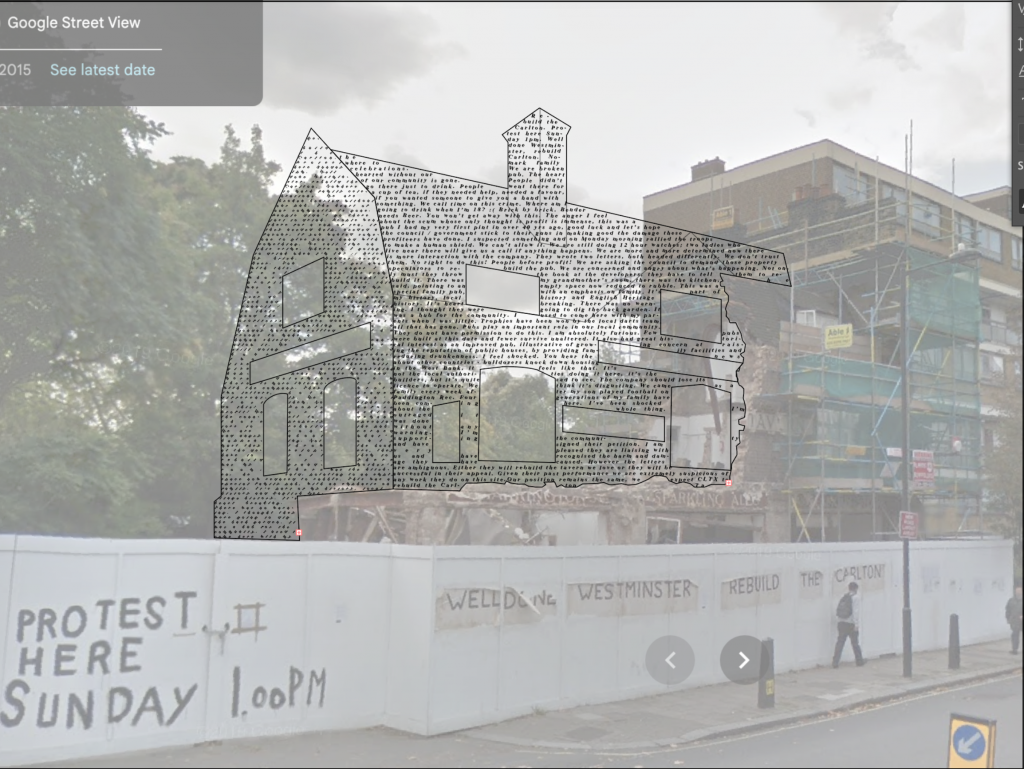
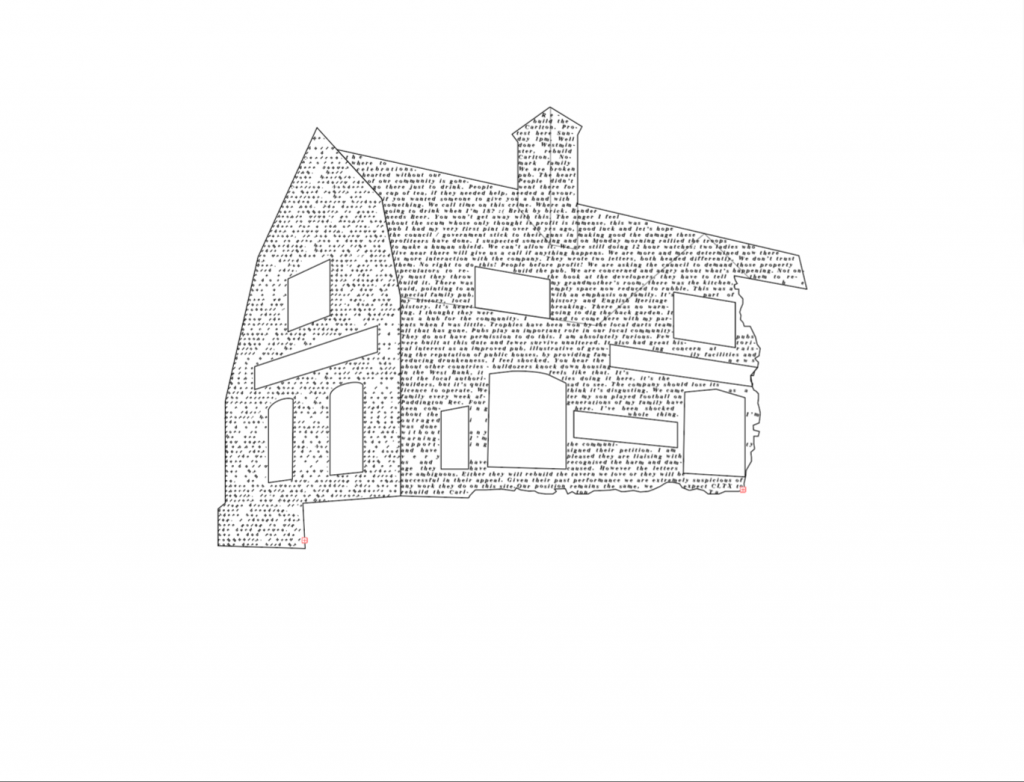
One of my first experiments focused on the period after the pub had been demolished. I used photographs of the missing building and filled its absent silhouette with publicly available testimonies from people who had spoken about the Carlton and its loss. At this stage, I was interested in whether language and memory could temporarily occupy the space left by the architecture.
I then began working with my own photographs of the rebuilt pub. (few examples below)
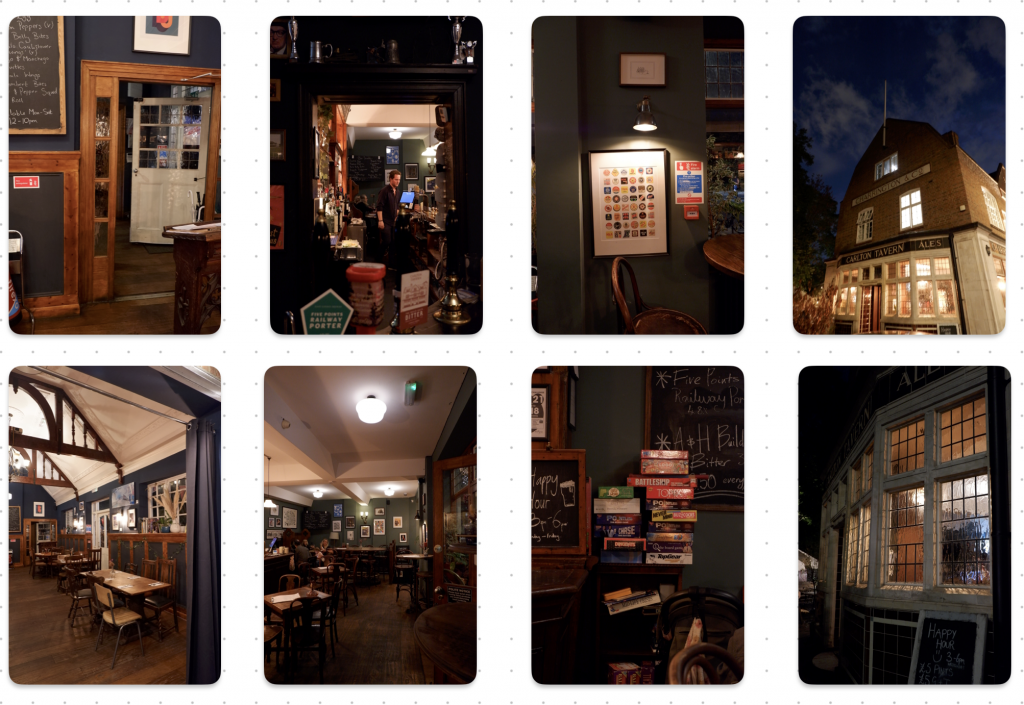
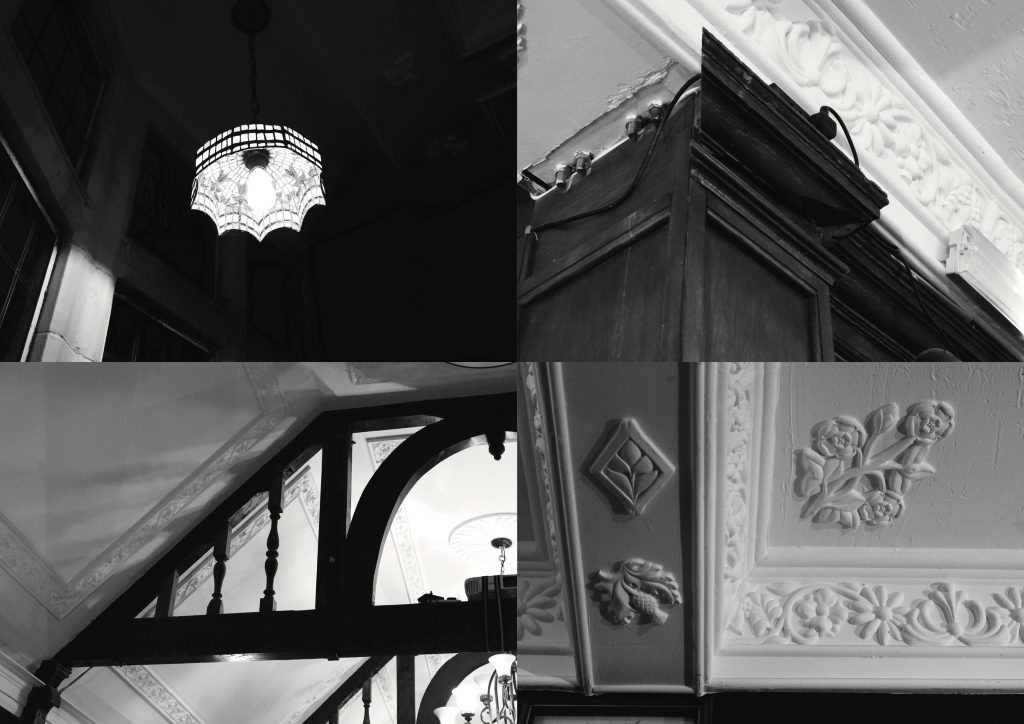
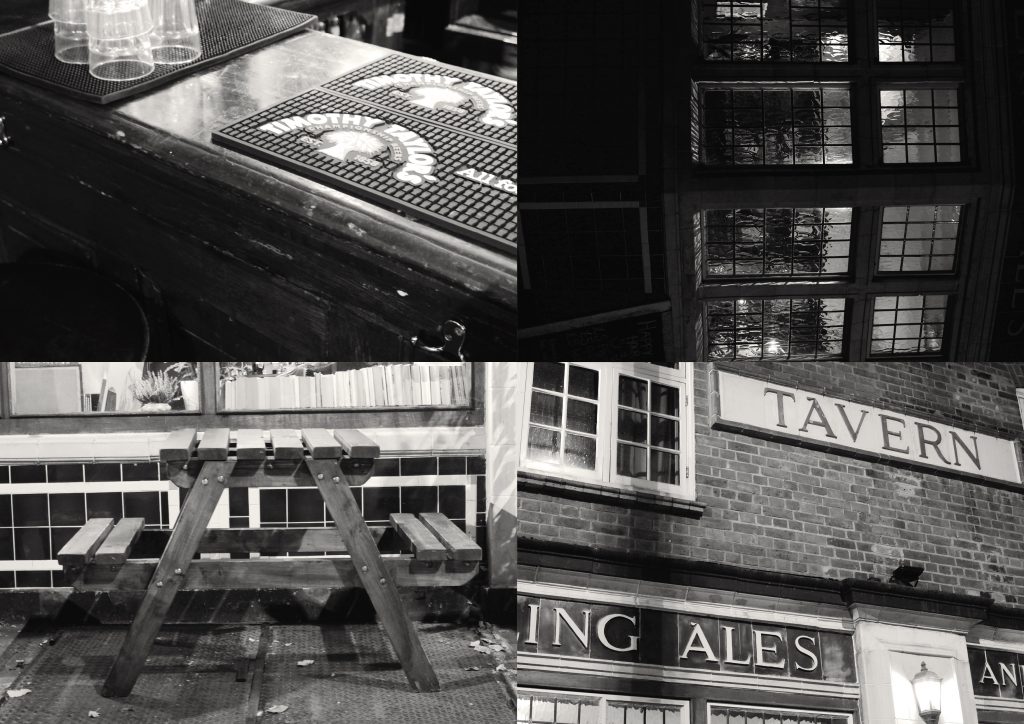
I selected a number of images and layered questions over them, focusing on what could and could not be understood through looking at the building alone. These questions became increasingly important as I struggled to access some of the memories and histories associated with the previous Carlton. Rather than trying to answer those gaps, I began using the questions themselves to make my position and limited access more visible.
Alongside this, I experimented with letterpress, trying to find type that felt visually close to the lettering associated with the Carlton. This was a less resolved direction and, looking back, probably came from feeling slightly stuck and wanting to return to making through material and typography. Although it did not become central to the project, it helped me test another way of responding to the visual identity of the site.
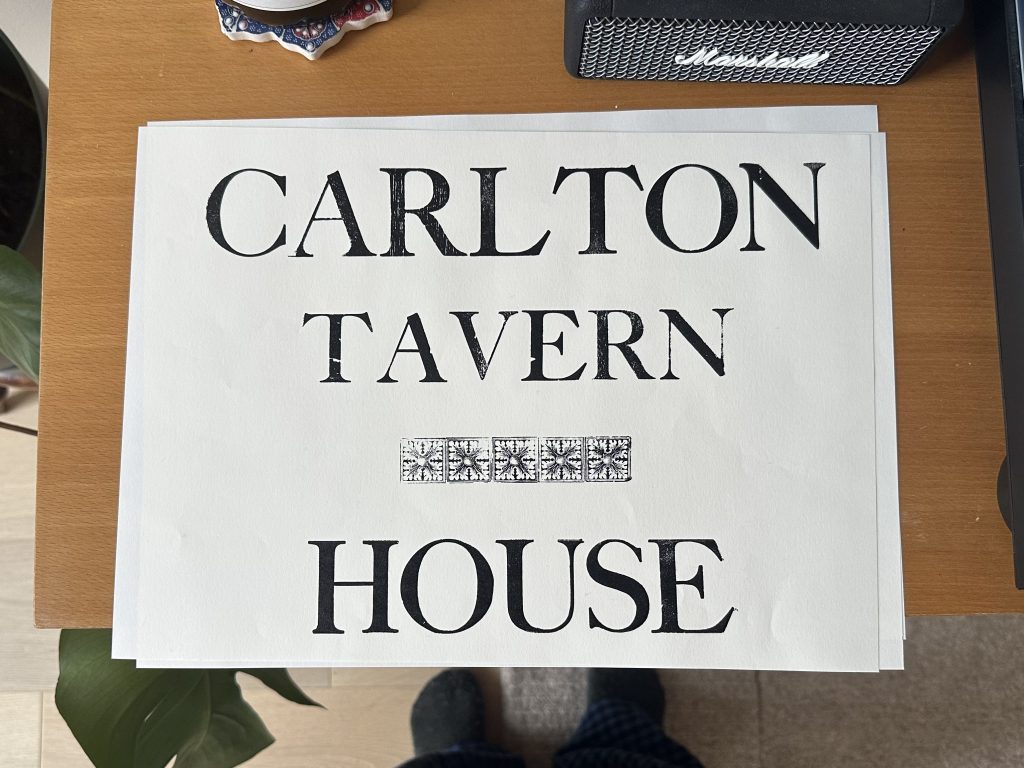
Together, these experiments began to move the work away from simply documenting the Carlton and towards thinking about how absence, testimonies, photography, my questions and material details (in this case typography) could each operate as different traces of the same place.
Leave a Reply