In deciding to use a specific place for the rest of my research, I came across my local pub. I began looking at both its documented history and the relationships people held with it.
Secondary research
I started with the history of the Carlton Tavern itself. The pub was demolished in 2015 and later reconstructed on the same site, facsimile following a sustained campaign for its rebuilding.
See Google Maps Gallery below from 2014 to 2022;
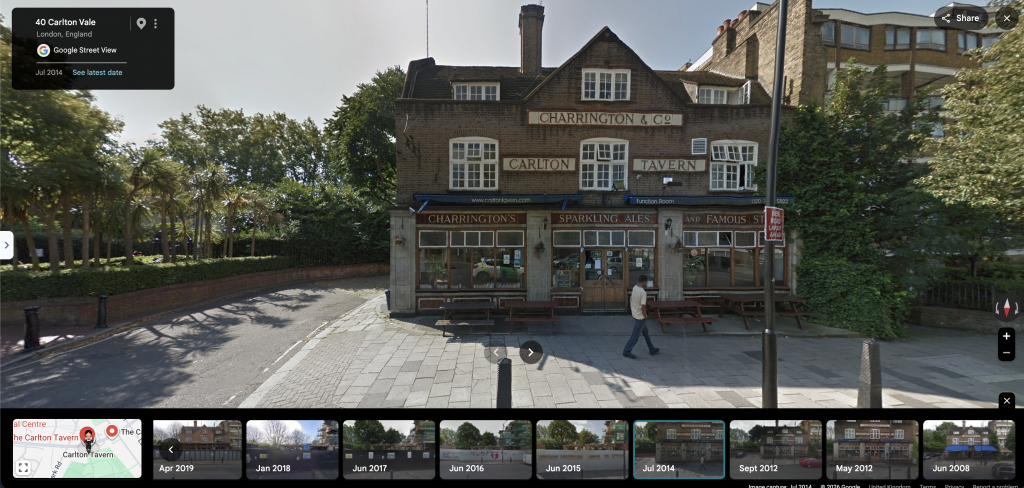
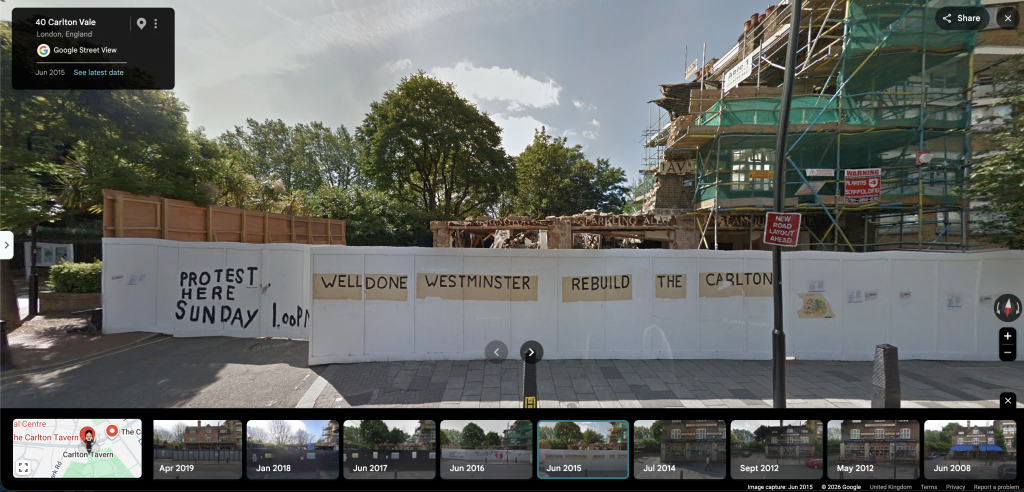
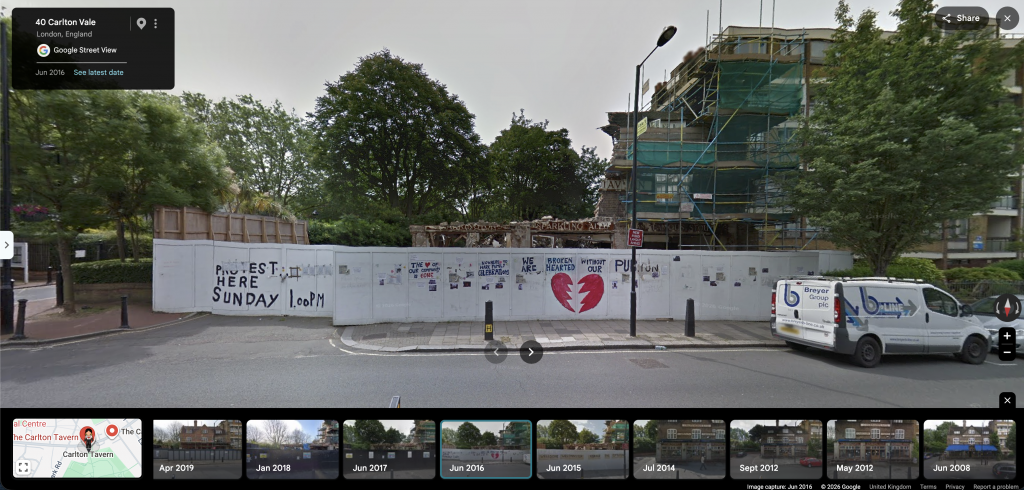
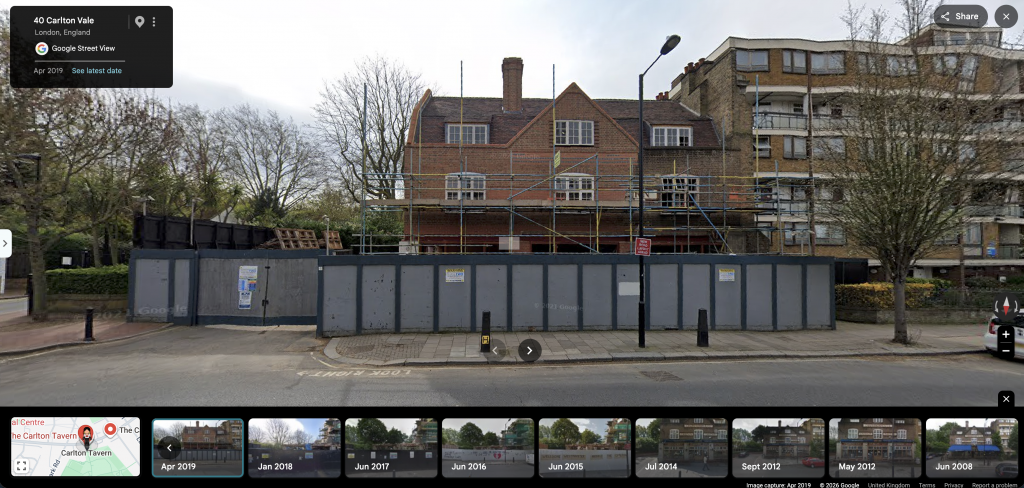
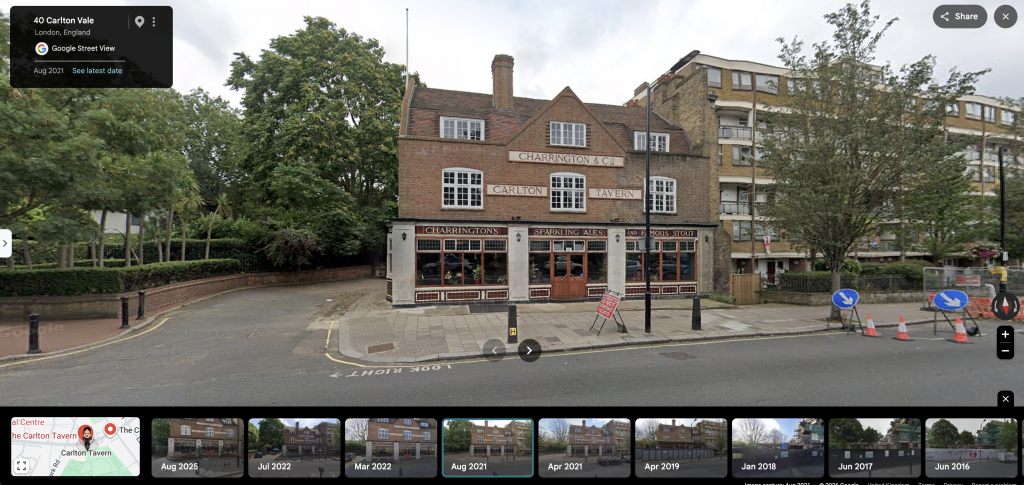
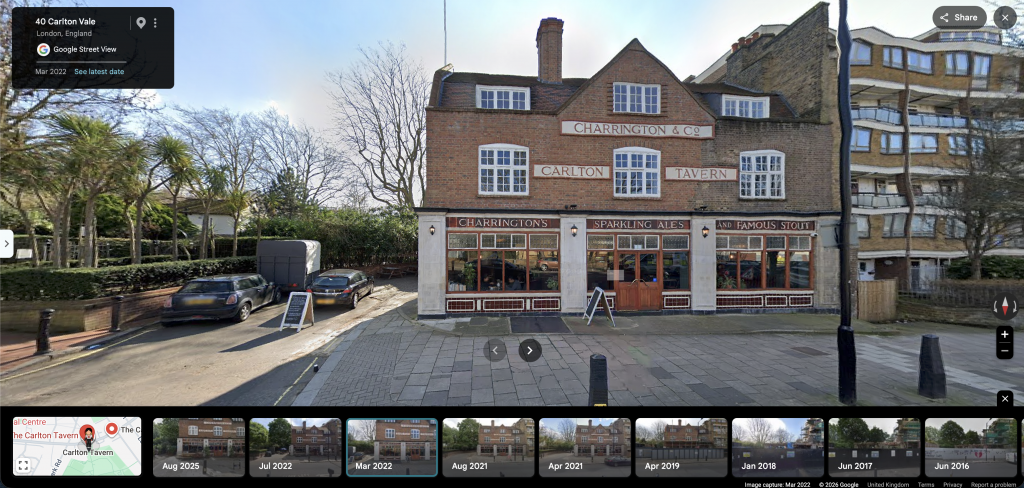
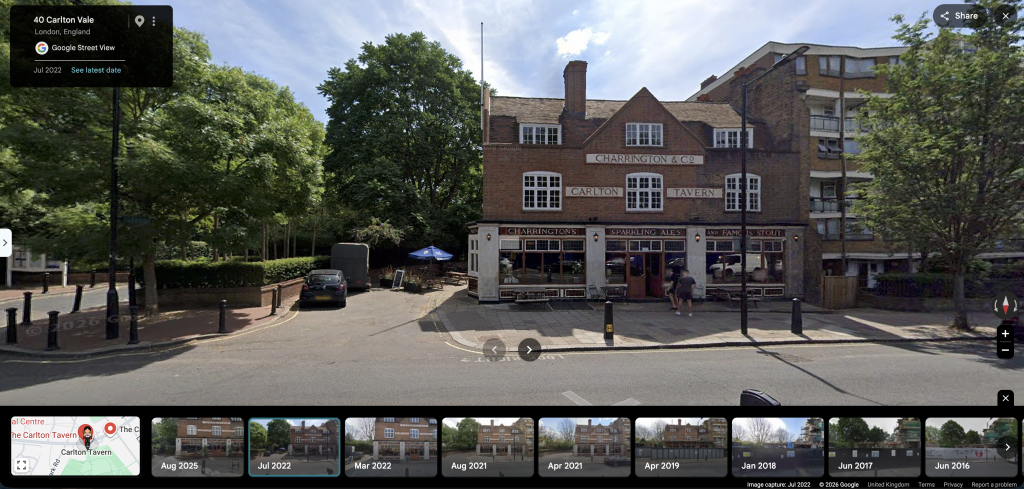
What interested me was the unusual condition this created: the physical continuity of the building had been broken, but its form and function were deliberately brought back.
This made the Carlton particularly useful for thinking about the distinction between space and place. The building could disappear and later be reconstructed, but the memories, routines and relationships associated with it did not necessarily follow the same timeline. I became interested in what reconstruction could actually restore, and whether recreating an earlier architectural form could ever recreate the same place.
(link attached to photo)

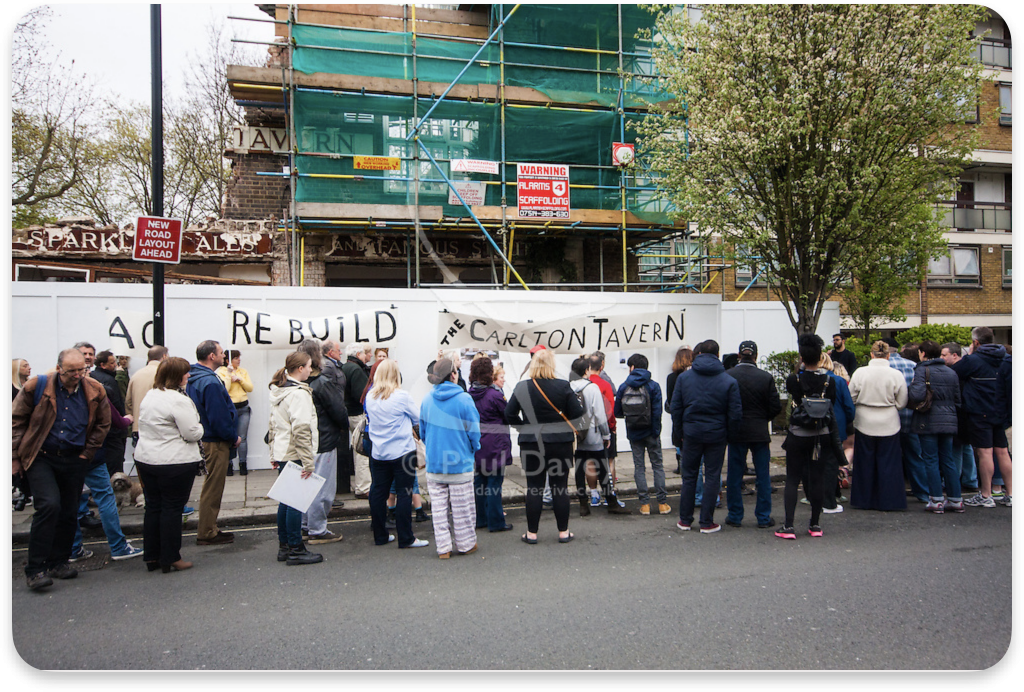
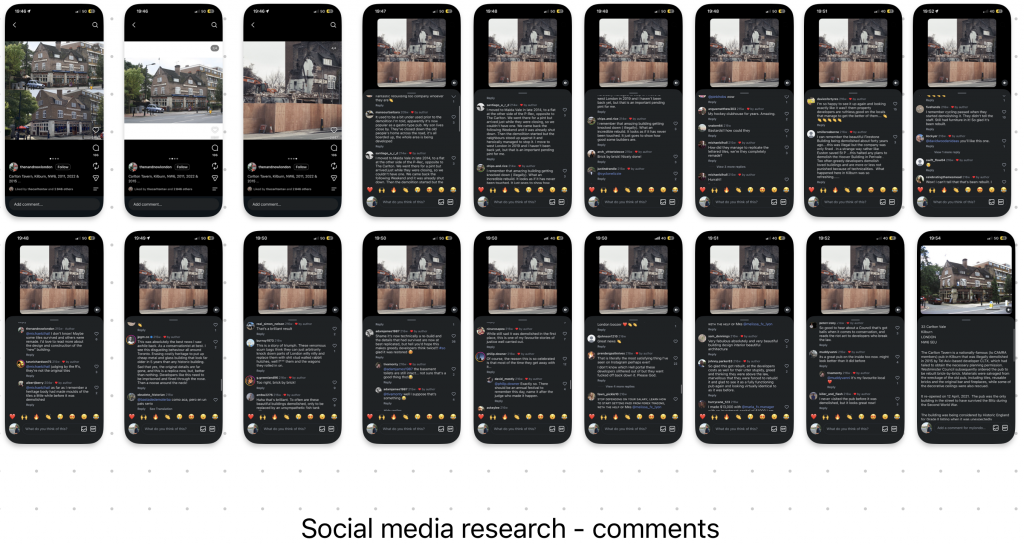
I also gathered publicly available testimonies, photographs and accounts relating to the demolition, campaign and rebuilding. These began to show that the Carlton did not exist as one shared version in people’s memories. Different accounts emphasised different relationships to the pub, which became important to my developing idea of place as something made up of multiple partial perspectives.
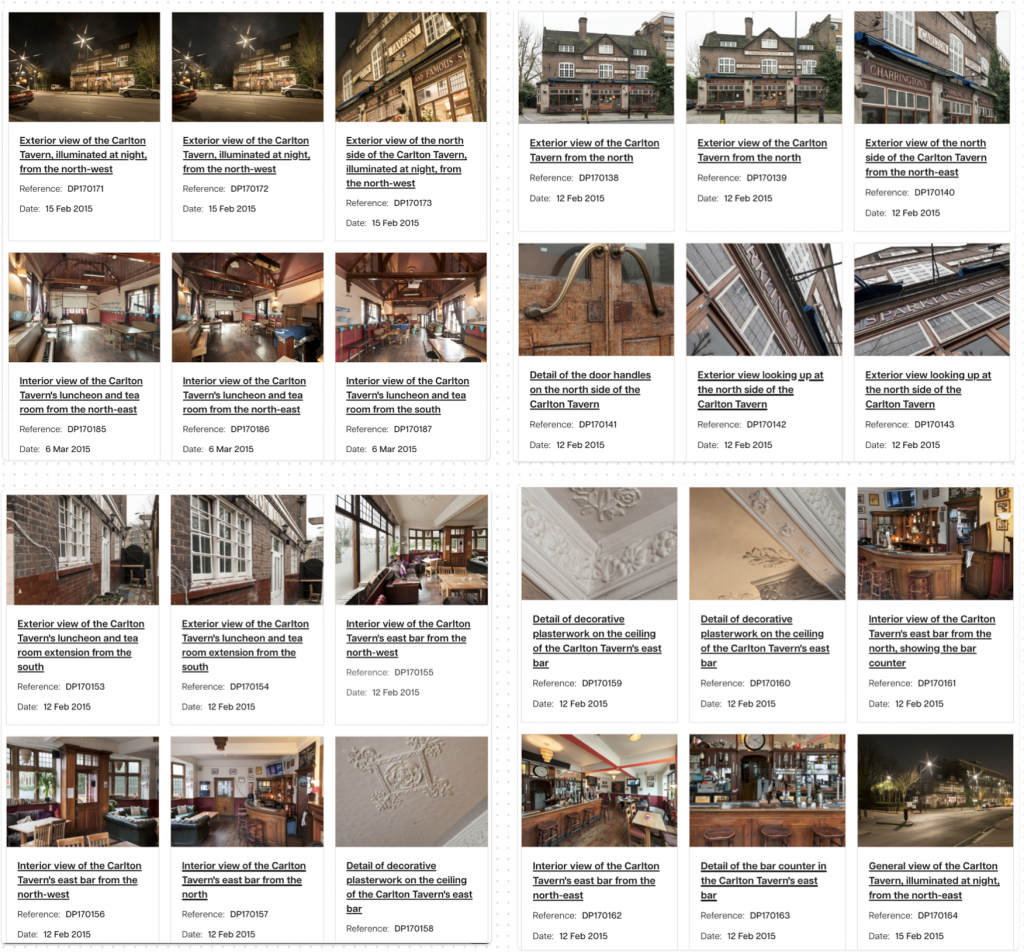
Below pictures of the pub pre demolition, available at Historic England (linked image).
Social media research for testimonies;
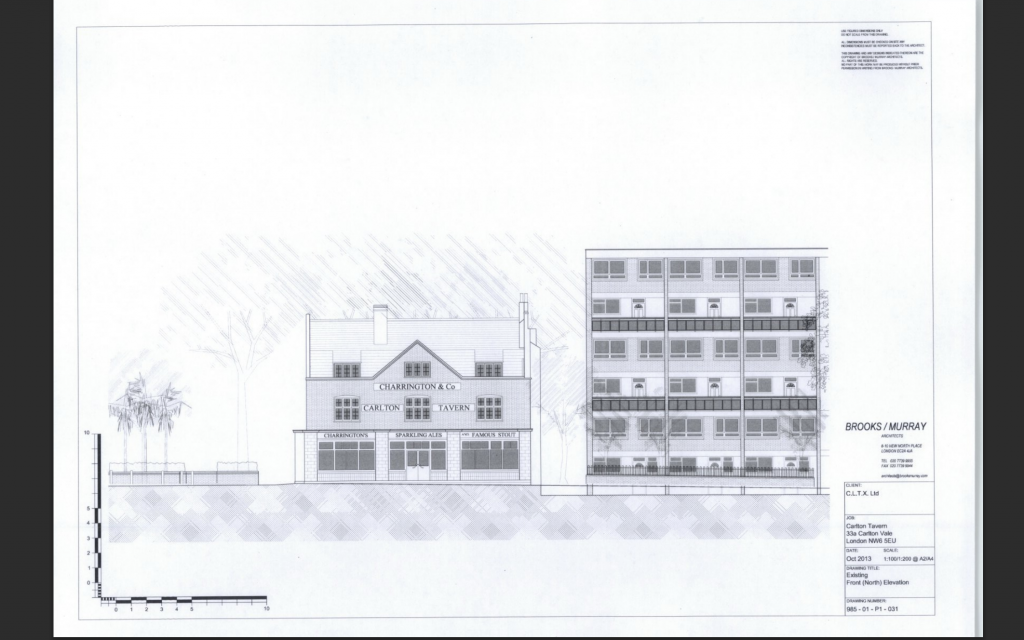
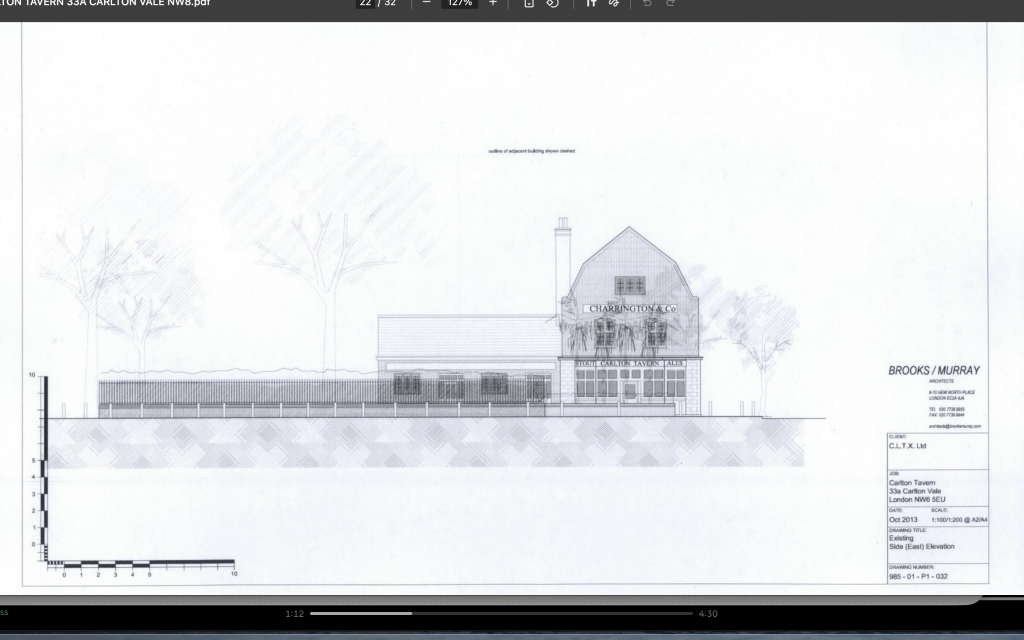
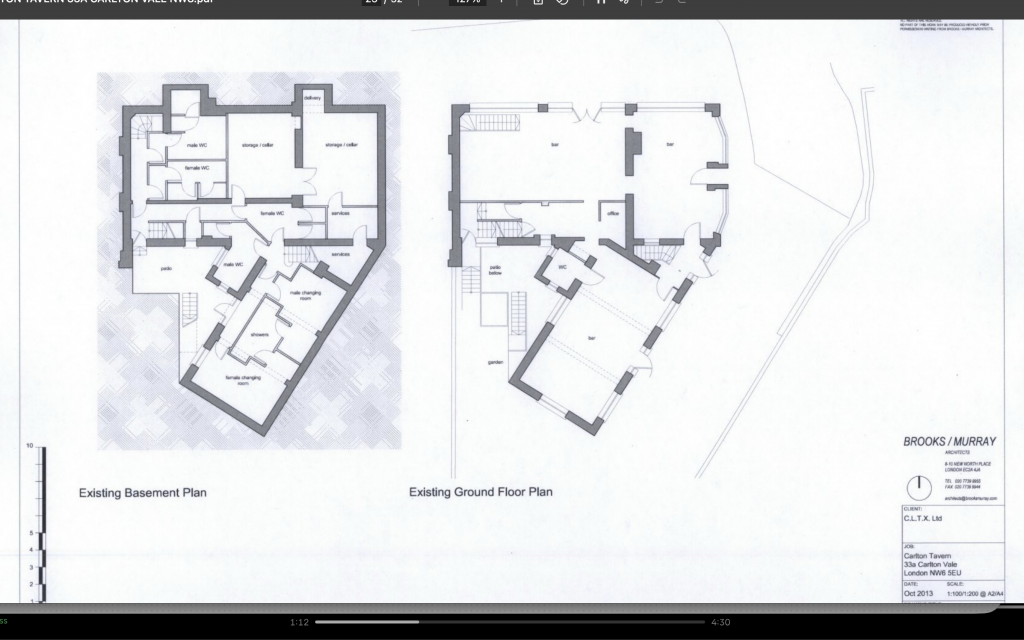
Blueprints/architectural drawings (conversion refusal of pub into flat building)
Primary research
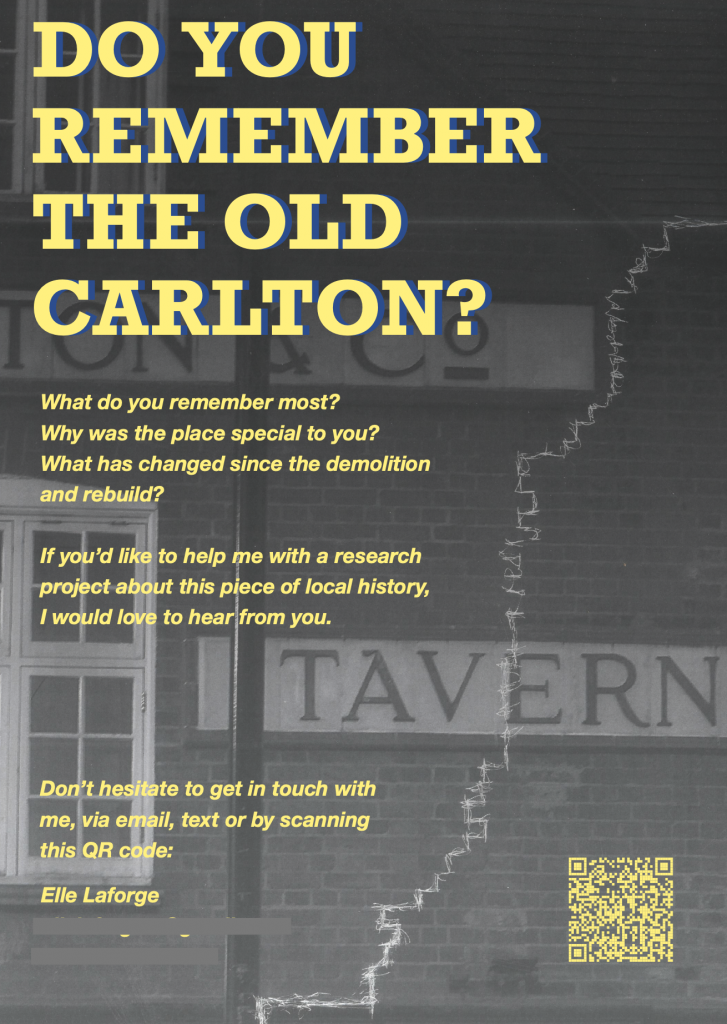
Alongside this, I tried to understand the Carlton through people who had direct relationships with it. I placed material in the pub asking whether people remembered the previous Carlton and attempted to contact people connected to its history.
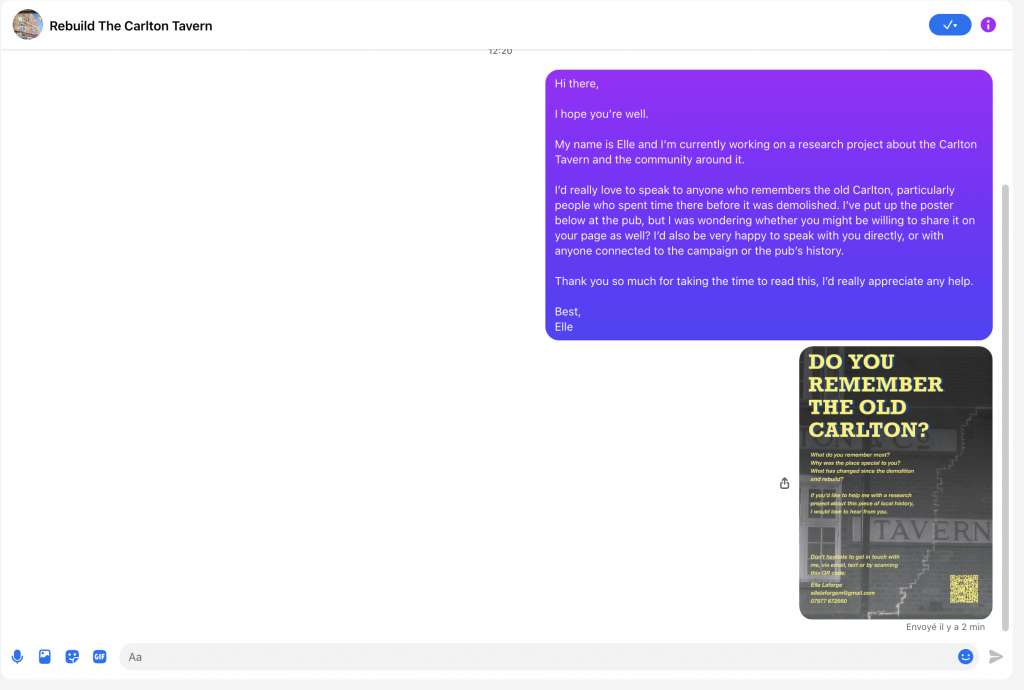
A lot of these attempts produced very little, which initially felt frustrating. Over time, however, that lack of access became useful in itself. It made me realise that my inability to recover a memory or testimony did not mean that it did not exist. It simply meant that there were parts of the place I could not claim access to.
I eventually interviewed the current owner, Tom Rees. Our conversation became particularly useful because he described the Carlton as something that had continually changed rather than remained fixed.
He spoke about changes in the neighbourhood, the people using the pub and what the business needed to become over time, noting that “pubs have a certain inertia of their own. They have a life of their own.”
He also described how different people arrived with their own stories and memories of the pub, saying that “everyone has their own… version of the event” and that people wanted a sense of ownership over what had happened there.
One comment became particularly significant to the project. Speaking about the reconstructed Carlton, he said:
“This is exactly like it was, but it’s not. It doesn’t feel like it was just before it closed.”
That distinction helped clarify the direction of my research. The building could resemble an earlier version of itself while the people, relationships, use and wider context around it continued to change.
Together, the primary and secondary research shifted my focus away from trying to recover a complete version of the Carlton and towards thinking about the partial traces through which a place can continue to be understood.
Leave a Reply