Category: Uncategorised

  • Guiding work

    Asher, M. (2008) Michael Asher. Santa Monica, CA: Santa Monica Museum of Art.

    For his 2008 installation at the Santa Monica Museum of Art, Michael Asher reconstructed the exposed frameworks of the temporary walls used across the museum’s previous exhibitions. Rather than reconstructing the exhibitions themselves, he brought together the architectural structures through which those exhibitions had temporarily occupied the space. The installation therefore made several past configurations of the same site simultaneously visible.
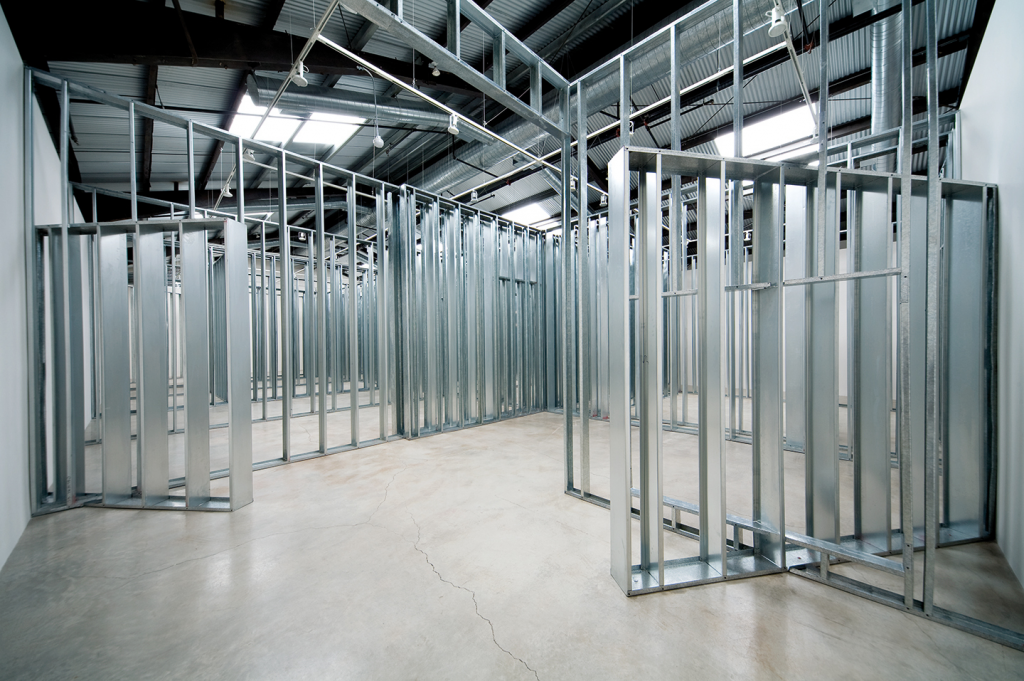
    This became relevant to my enquiry through its treatment of place as something constituted through successive temporary arrangements. The museum is physically the same location, yet its internal organisation repeatedly changes. Asher’s work does not attempt to recreate a single former state, but gives material form to traces of several states at once. This connects strongly to my developing interest in recording one configuration of a place while acknowledging that other configurations existed before it and will exist afterwards. Unlike House, which became central to my written argument through absence and loss, Asher remained a useful contextual reference for thinking about accumulation, temporality and spatial change.


    Snow, M. (1975) Cover to Cover. Halifax: Press of the Nova Scotia College of Art and Design; New York: New York University Press.

    Michael Snow’s Cover to Cover is an artist’s book constructed entirely through photographic sequence. The reader follows a figure through spaces and actions, but the perspective repeatedly changes between the photographed subject and the photographers recording him. The book can also be approached through its front-to-back and reverse relationships, making the physical act of navigating the publication part of how the work is understood.
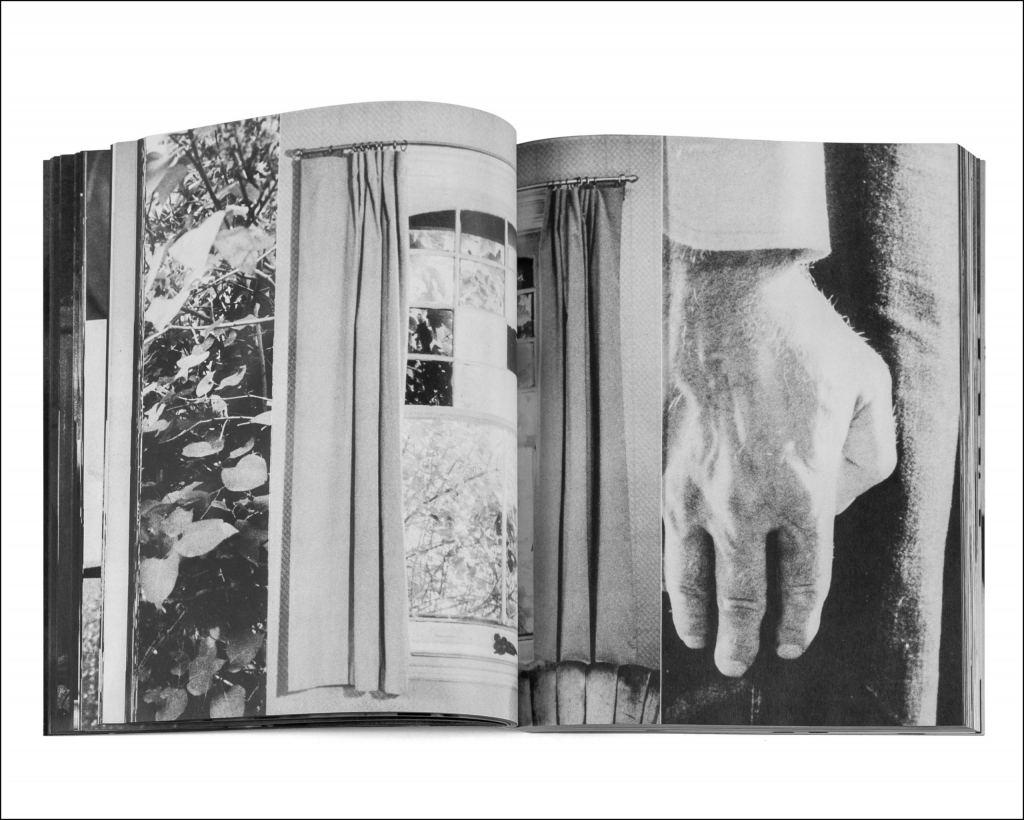
    Snow became relevant less as a conceptual reference for place itself and more as a formal reference for how a future Portfolio of Place might be encountered. Rather than presenting documentation as a flat collection of evidence, Cover to Cover demonstrates how sequence, viewpoint and the structure of a publication can determine the reader’s relationship to information. It also makes the act of recording visible rather than pretending that the camera offers a neutral viewpoint. This connects to my interest in communicating the conditions through which traces are produced and encountered.


    Van Horn, E. (2014) Living Locally. Axminster: Uniformbooks. Reprinted 2019.

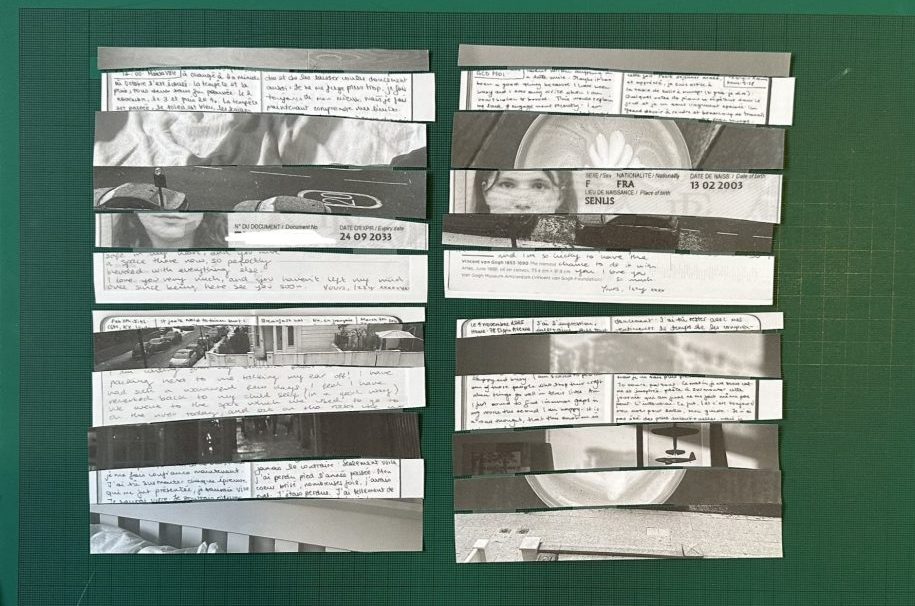
    Erica Van Horn’s Living Locally brings together entries from a daily journal written over five years while living in rural Tipperary, Ireland. Through short observations of neighbours, animals, weather, speech, journeys and everyday routines, Van Horn records details that might otherwise pass unnoticed. Rather than trying to define the place through major landmarks or events, a sense of place gradually emerges through the accumulation of small and seemingly ordinary encounters.
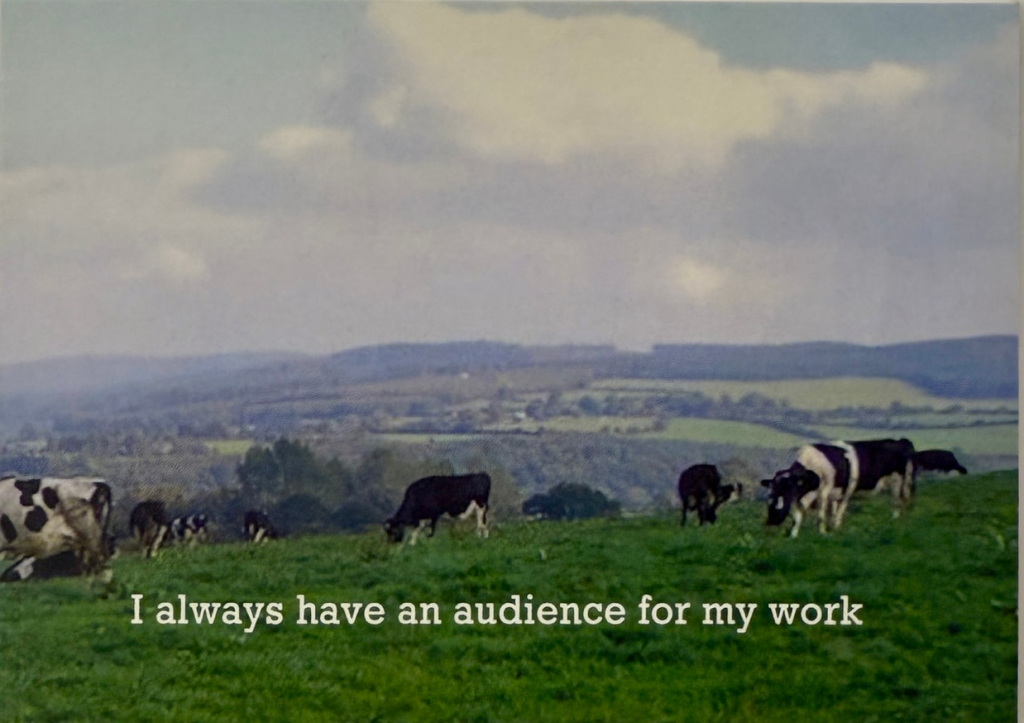
    What became particularly relevant to my enquiry was Van Horn’s awareness of her own position within the place she documents. Having moved to Ireland from elsewhere, she writes from a position that is simultaneously embedded in everyday local life and still conscious of being an outsider. Her observations therefore do not claim to represent the place completely or on behalf of everyone who lives there. Instead, they record one situated experience of it. This connects closely to my developing idea of a Portfolio of Place, where fragments gathered through observation can build an account of a place while still acknowledging who is doing the recording and what they are able to access.


    Forensic Architecture (2018–) The Grenfell Tower Fire. London: Forensic Architecture.

    See also Forensic Architecture (2024) The Grenfell Tower Fire: Situated Testimonies.

    Forensic Architecture’s research into the Grenfell Tower fire brings together video, photography, spatial modelling, audio and testimony in order to examine an event through multiple partial sources. Their initial Grenfell project began assembling publicly recorded footage within a three-dimensional model of the tower, allowing individual recordings to be understood in spatial and temporal relation to one another. A later project, Situated Testimonies, developed this approach through testimony and a wider range of investigative methods.
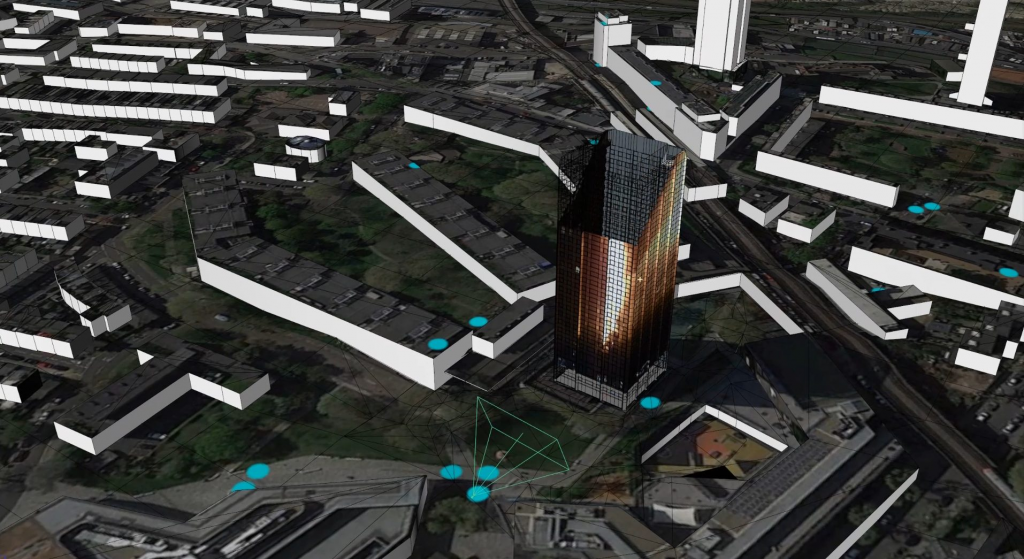
    The work became relevant to my enquiry because it demonstrates how different traces can be placed into relation without necessarily becoming one homogeneous form of information. Each recording retains its own position, viewpoint and limitations while contributing to a larger spatial account. This offers a methodological precedent for the Portfolio of Place, particularly my interest in bringing sound, photography, testimony, movement and other forms of evidence together without translating them all into the same visual language. The context of Grenfell is of course significantly more serious and politically specific than my own research, so I would treat this as a methodological reference rather than drawing a direct equivalence between the projects.


    Eichhorn, K. (2013) The Archival Turn in Feminism: Outrage in Order. Philadelphia: Temple University Press.

    Kate Eichhorn examines feminist archival practices and the movement of cultural material such as zines and activist publications into institutional and community archives. Importantly for my research, her account does not position the archive simply as a passive container for the past. Archiving involves acts of collection, organisation, preservation and distribution through which particular histories become accessible and meaningful in the present.
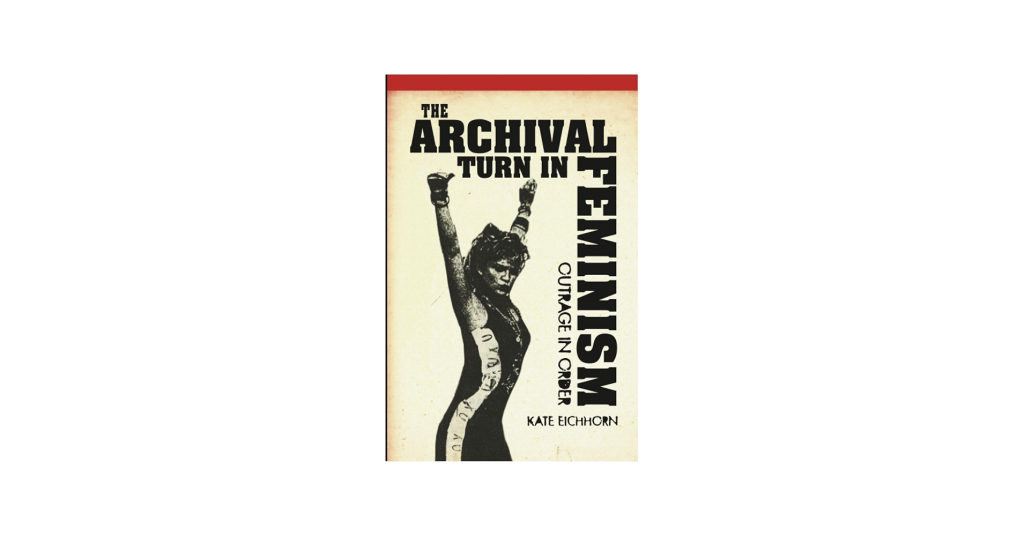
    This complicated my early instinct to describe the Portfolio of Place as an “archive”. If the selection and organisation of material already produces a particular reading, then an archive cannot be understood as a neutral accumulation of everything that exists. Eichhorn therefore supported my move towards describing the Portfolio as situated and authored. The relevance to my enquiry lies particularly in the politics of selection: what is recorded, what enters a collection, what becomes


    Hall, M. (2020) ‘We Are Built to Forget’, The Paris Review, 16 November.

    Meredith Hall’s essay We Are Built to Forget reflects on the instability of personal memory and the relationship between remembering and forgetting. Hall moves through memories she has retained, events she has forgotten and material objects that preserve details differently from her own recollection. Rather than presenting forgetting simply as failure, the essay considers it as part of the process through which experience is organised into meaningful narratives.

    This became particularly relevant to my investigation of memory as a possible trace of place. A memory cannot be treated as a complete recording of an event simply because it was experienced directly. Details disappear, others become more significant, and material evidence may contradict or reactivate what someone remembers. Hall therefore offered another reason for the Portfolio of Place not to treat testimony as transparent evidence. Gaps within memory can themselves communicate something about the conditions through which a place persists.


    Dunye, C. (dir.) (1996) The Watermelon Woman. USA.

    Cheryl Dunye’s The Watermelon Woman follows a fictionalised version of Dunye researching a largely forgotten Black actress from early Hollywood. The film deliberately moves between documentary conventions, fictional narrative and fabricated archival material. The actress at the centre of the investigation, Fae Richards, is herself fictional, allowing Dunye to address histories of Black and queer women for whom conventional archives are often incomplete or absent.
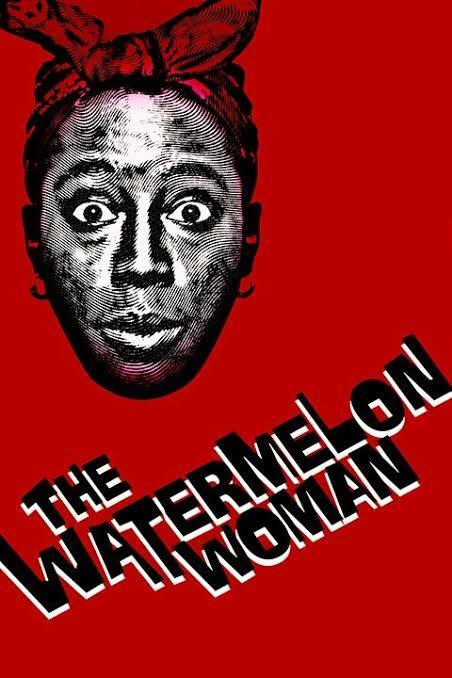
    The film became relevant to my research through the distinction between absence within an archive and absence from history itself. A missing record does not necessarily mean that the person, relationship or experience did not exist. This parallels the distinction I encountered through the Carlton between information that does not exist and information to which I simply do not have access. Dunye takes this considerably further by actively fabricating archival material as a critical response to historical erasure. I did not adopt this strategy within my own work, but the film helped me think about gaps as politically and culturally produced rather than automatically neutral.
  • Carlton Research – Primary and secondary

    In deciding to use a specific place for the rest of my research, I came across my local pub. I began looking at both its documented history and the relationships people held with it.
    Secondary research

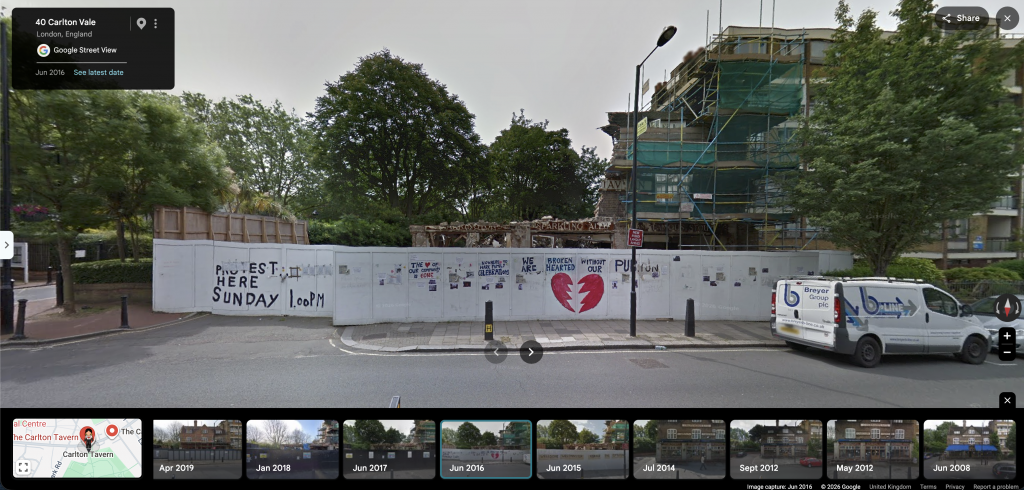
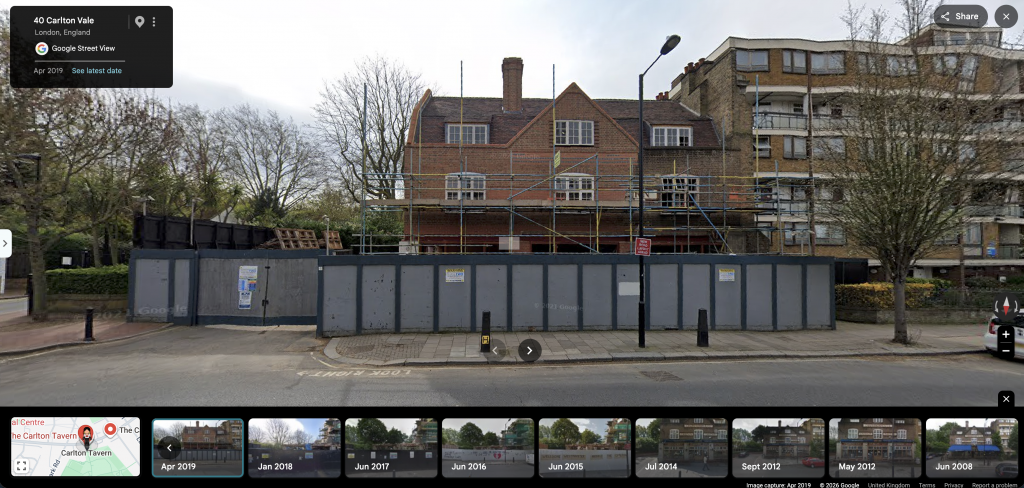
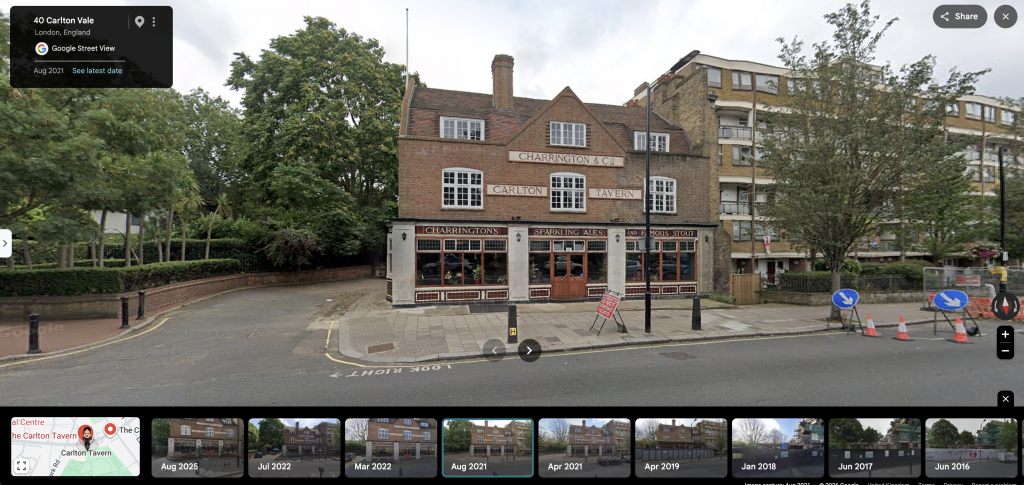
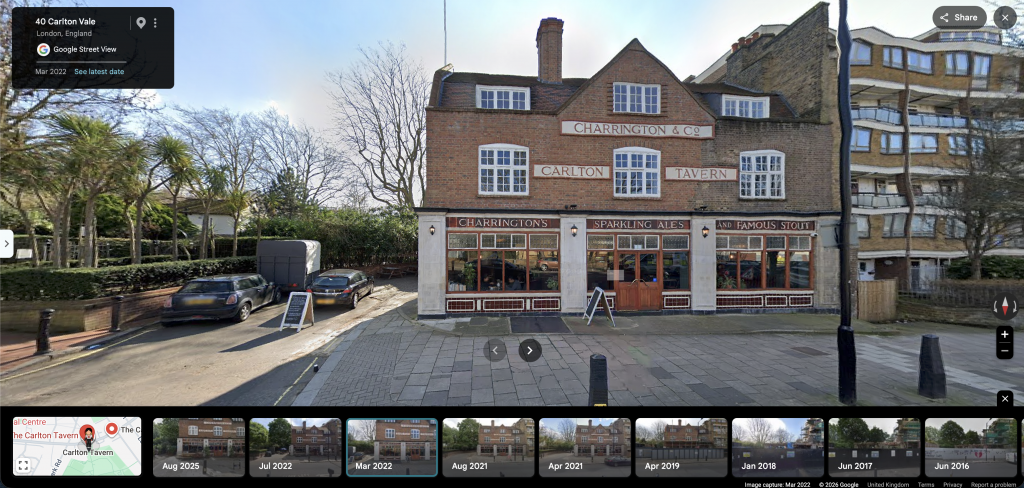
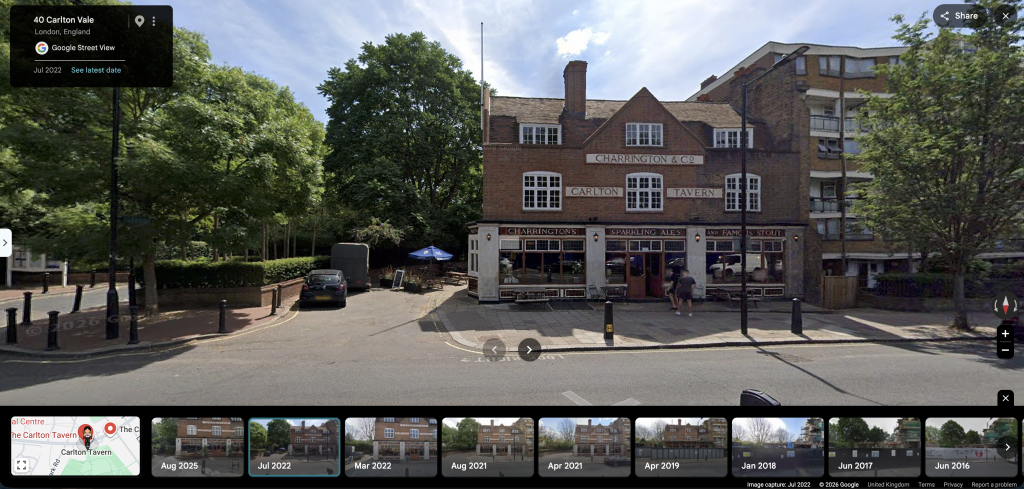
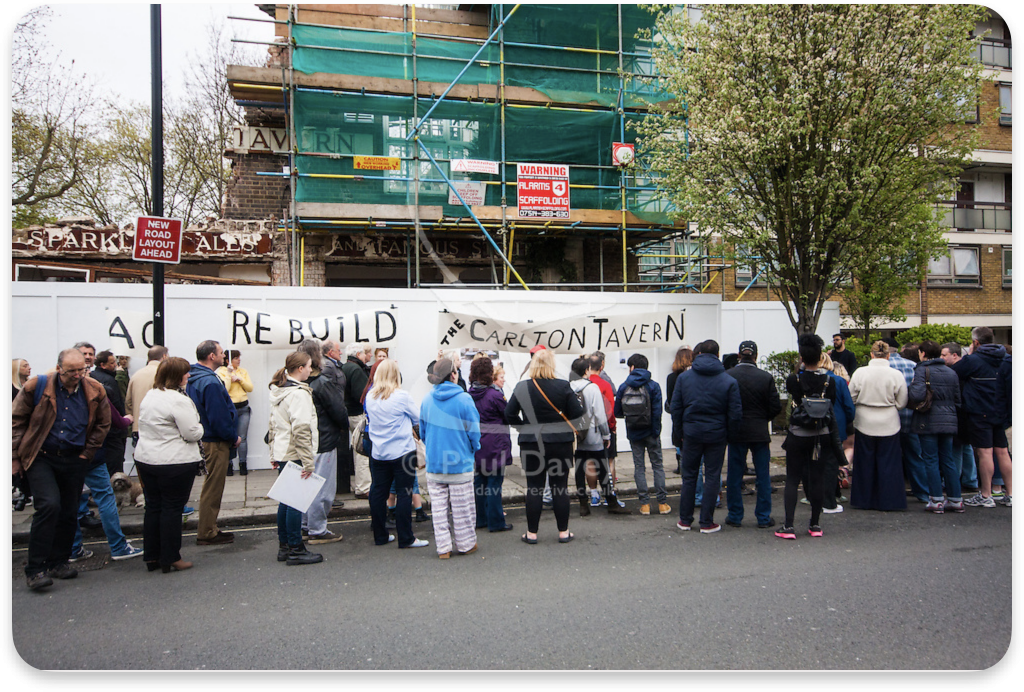
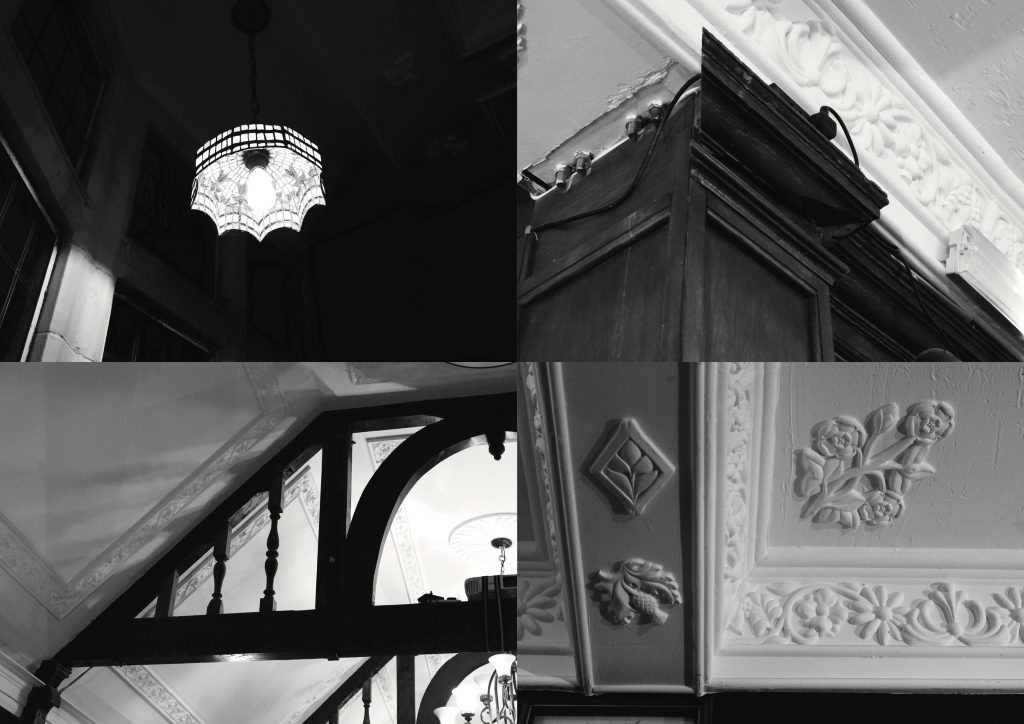
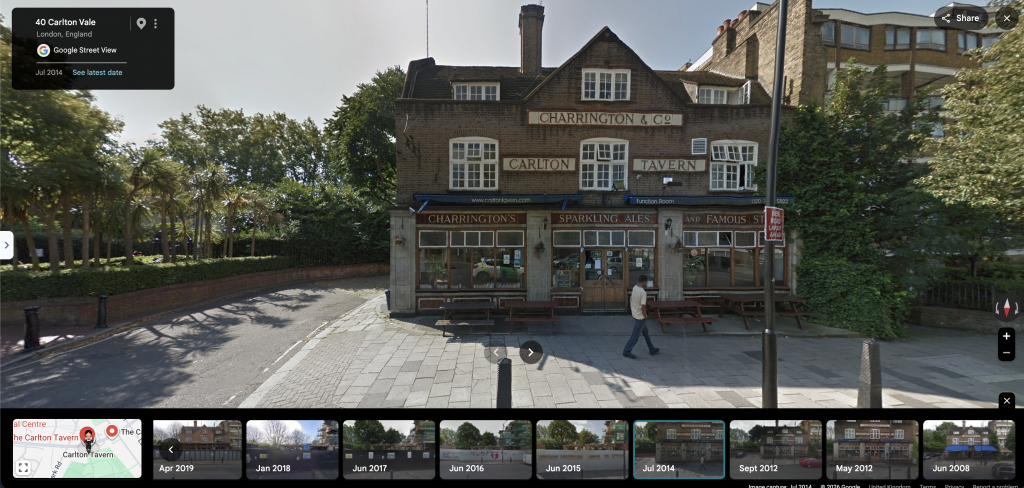
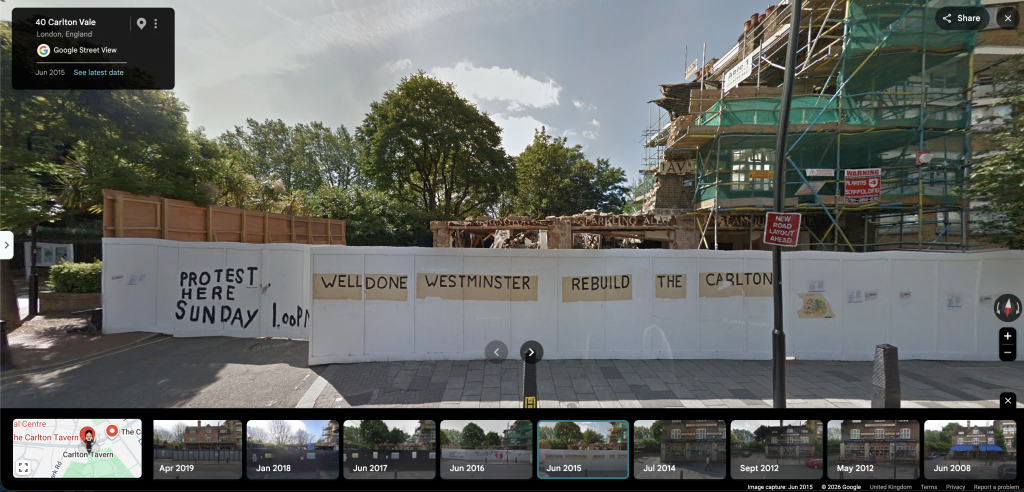
    I started with the history of the Carlton Tavern itself. The pub was demolished in 2015 and later reconstructed on the same site, facsimile following a sustained campaign for its rebuilding.

    See Google Maps Gallery below from 2014 to 2022;

    What interested me was the unusual condition this created: the physical continuity of the building had been broken, but its form and function were deliberately brought back.

    This made the Carlton particularly useful for thinking about the distinction between space and place. The building could disappear and later be reconstructed, but the memories, routines and relationships associated with it did not necessarily follow the same timeline. I became interested in what reconstruction could actually restore, and whether recreating an earlier architectural form could ever recreate the same place.

    (link attached to photo)

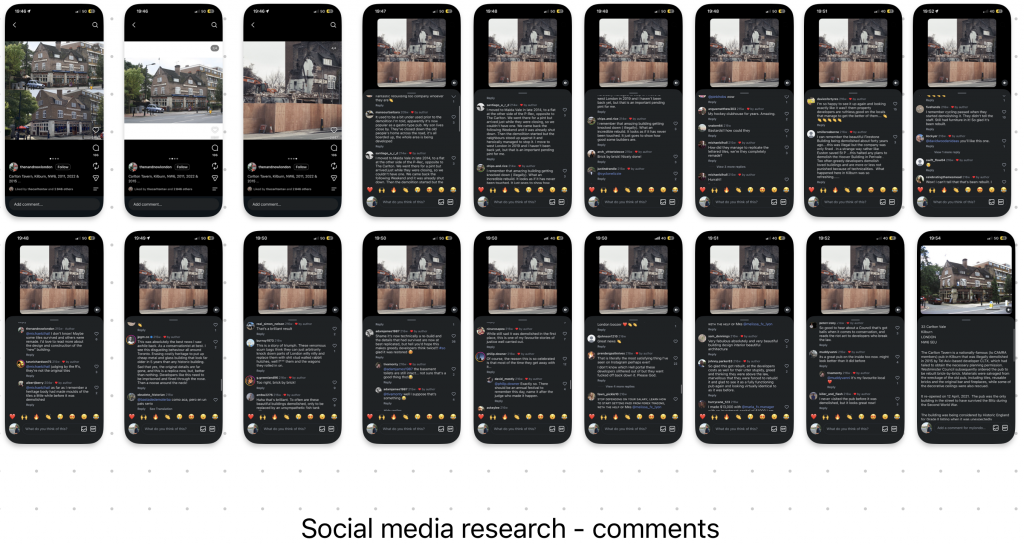
    I also gathered publicly available testimonies, photographs and accounts relating to the demolition, campaign and rebuilding. These began to show that the Carlton did not exist as one shared version in people’s memories. Different accounts emphasised different relationships to the pub, which became important to my developing idea of place as something made up of multiple partial perspectives.

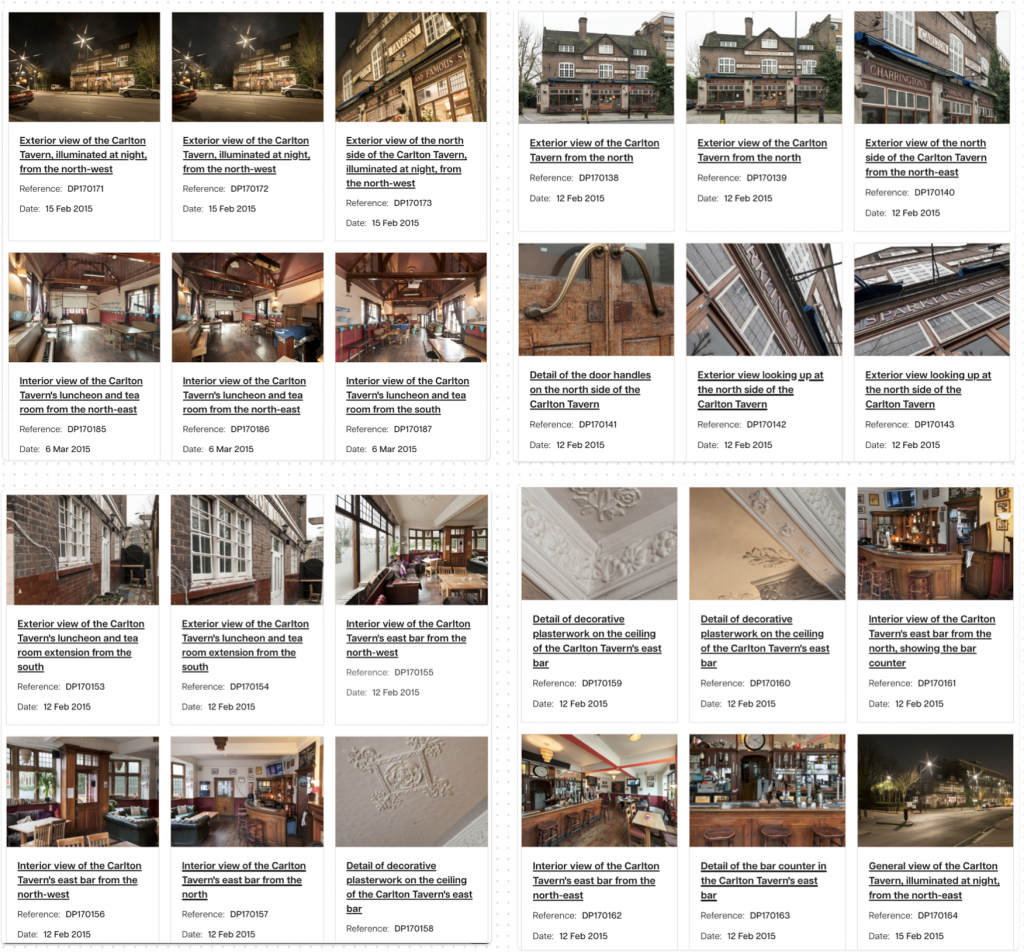
    Below pictures of the pub pre demolition, available at Historic England (linked image).

    Social media research for testimonies;

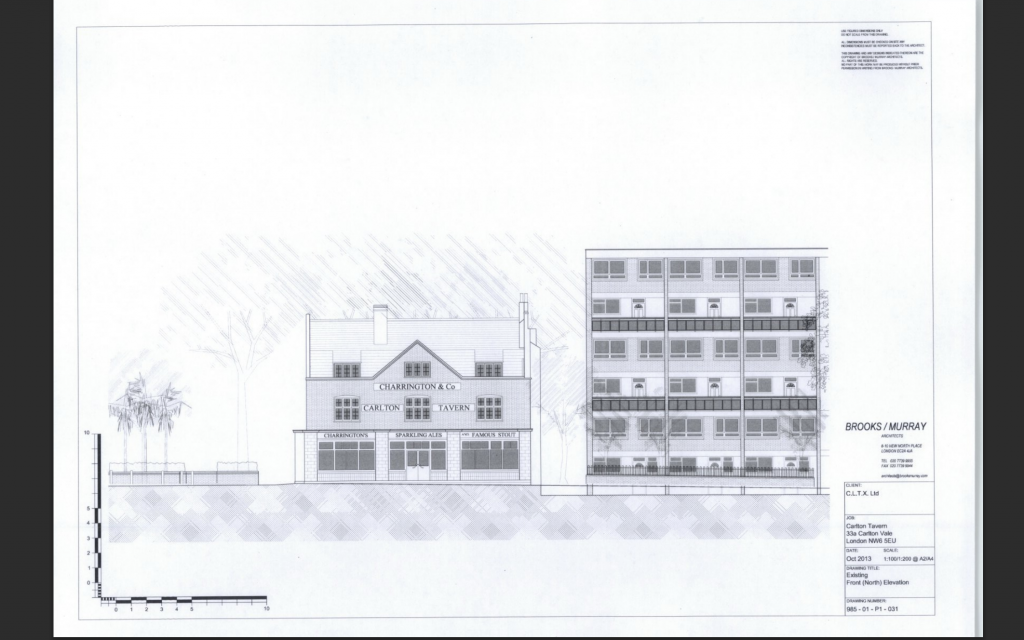
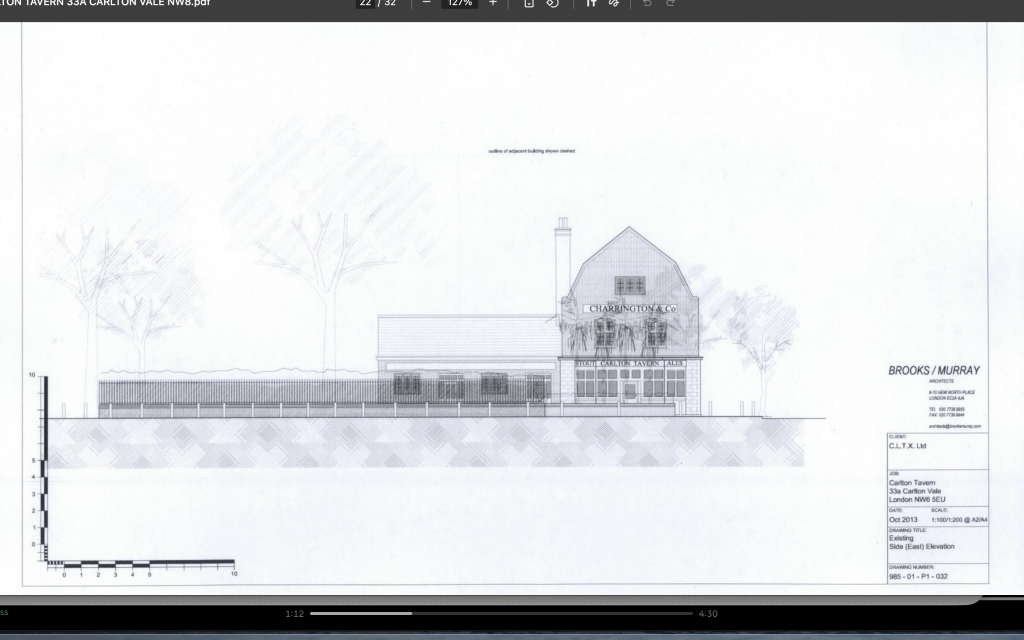
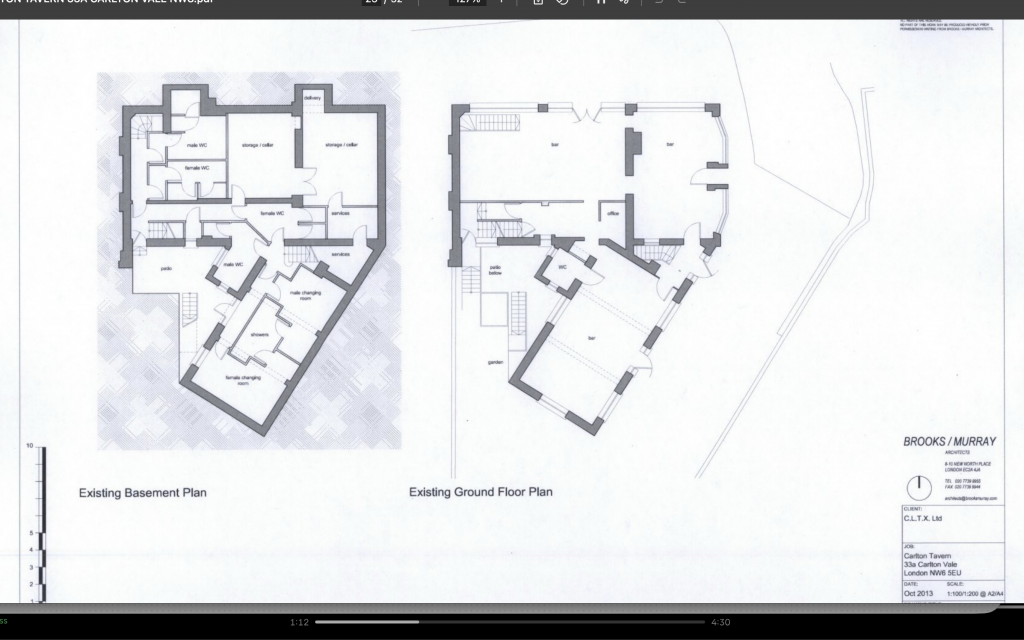
    Blueprints/architectural drawings (conversion refusal of pub into flat building)

    Primary research

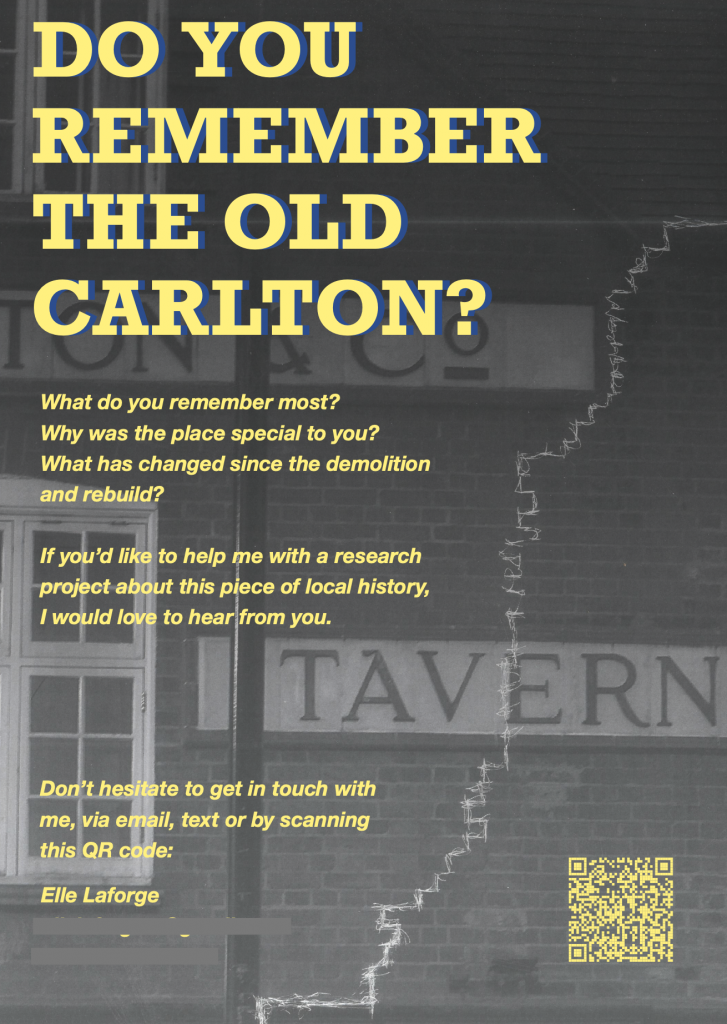
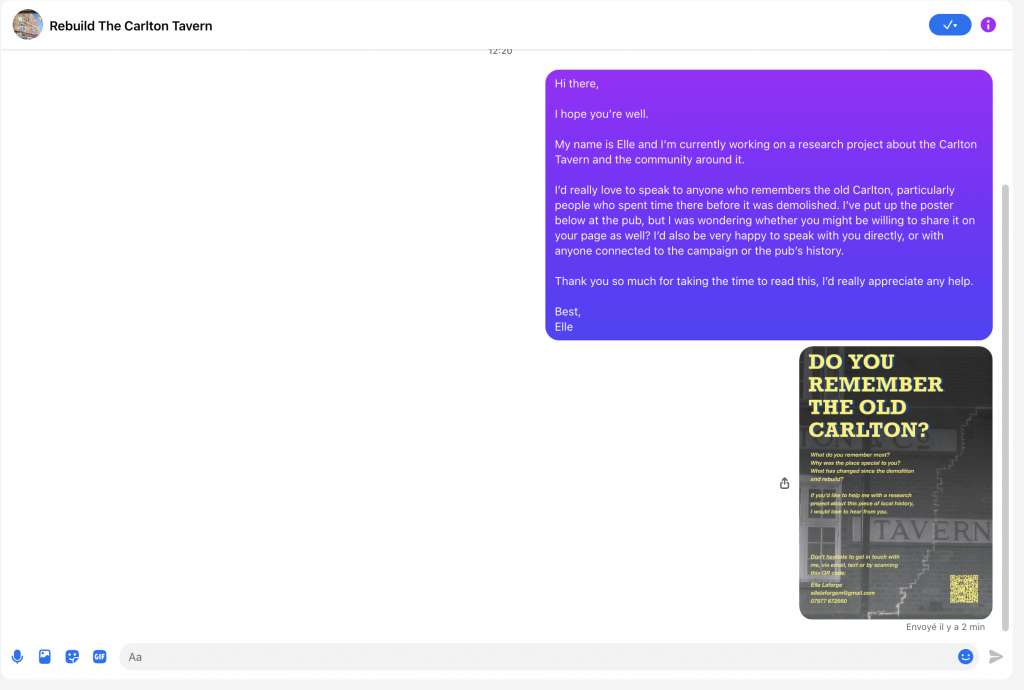
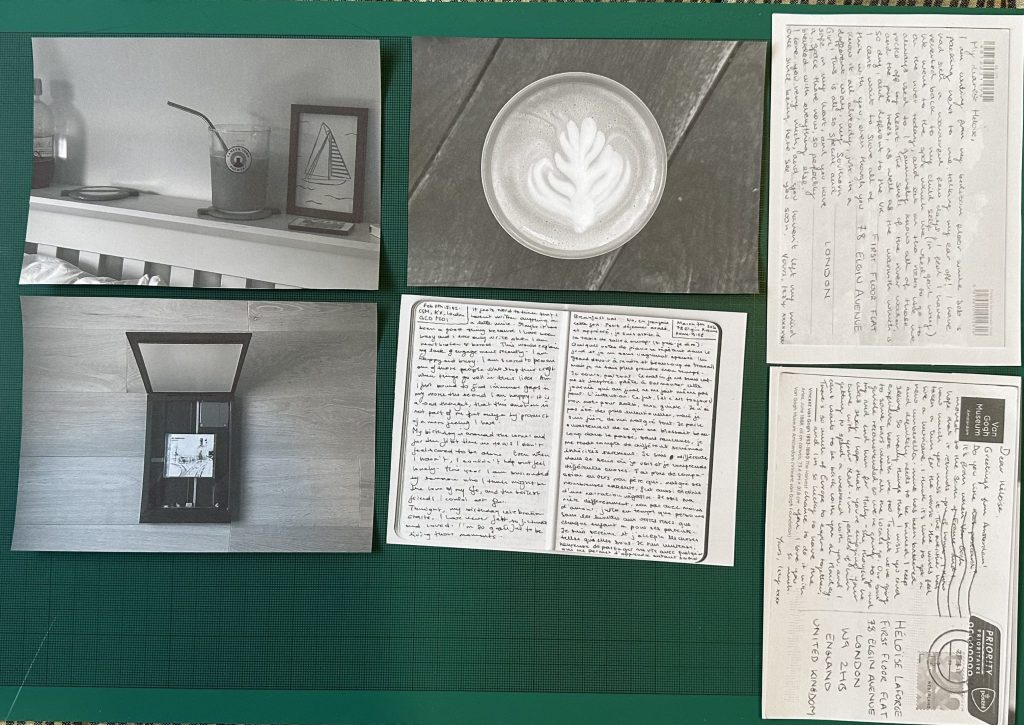
    Alongside this, I tried to understand the Carlton through people who had direct relationships with it. I placed material in the pub asking whether people remembered the previous Carlton and attempted to contact people connected to its history.

    A lot of these attempts produced very little, which initially felt frustrating. Over time, however, that lack of access became useful in itself. It made me realise that my inability to recover a memory or testimony did not mean that it did not exist. It simply meant that there were parts of the place I could not claim access to.

    I eventually interviewed the current owner, Tom Rees. Our conversation became particularly useful because he described the Carlton as something that had continually changed rather than remained fixed.

    He spoke about changes in the neighbourhood, the people using the pub and what the business needed to become over time, noting that “pubs have a certain inertia of their own. They have a life of their own.”

    He also described how different people arrived with their own stories and memories of the pub, saying that “everyone has their own… version of the event” and that people wanted a sense of ownership over what had happened there.

    One comment became particularly significant to the project. Speaking about the reconstructed Carlton, he said:

    “This is exactly like it was, but it’s not. It doesn’t feel like it was just before it closed.”

    That distinction helped clarify the direction of my research. The building could resemble an earlier version of itself while the people, relationships, use and wider context around it continued to change.

    Together, the primary and secondary research shifted my focus away from trying to recover a complete version of the Carlton and towards thinking about the partial traces through which a place can continue to be understood.

  • Unit 2 (from W2): Triangulating – Studio work development

    After deciding to use the Carlton Tavern as a site through which to explore place more specifically, I began testing different ways of working with the traces surrounding it.

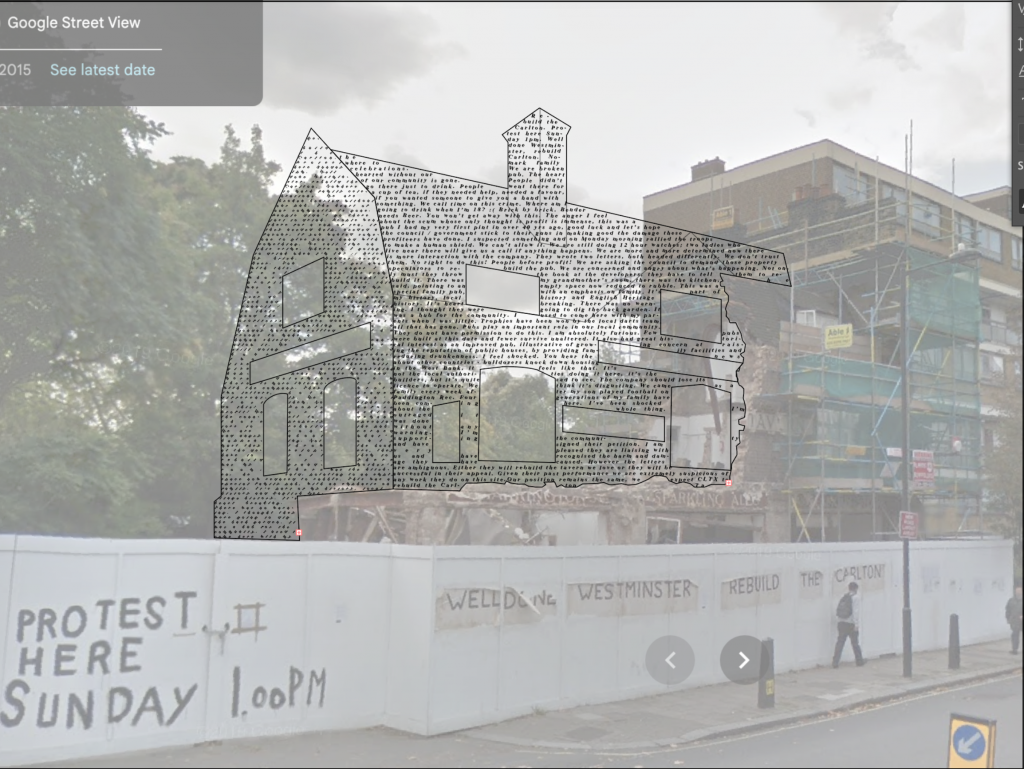
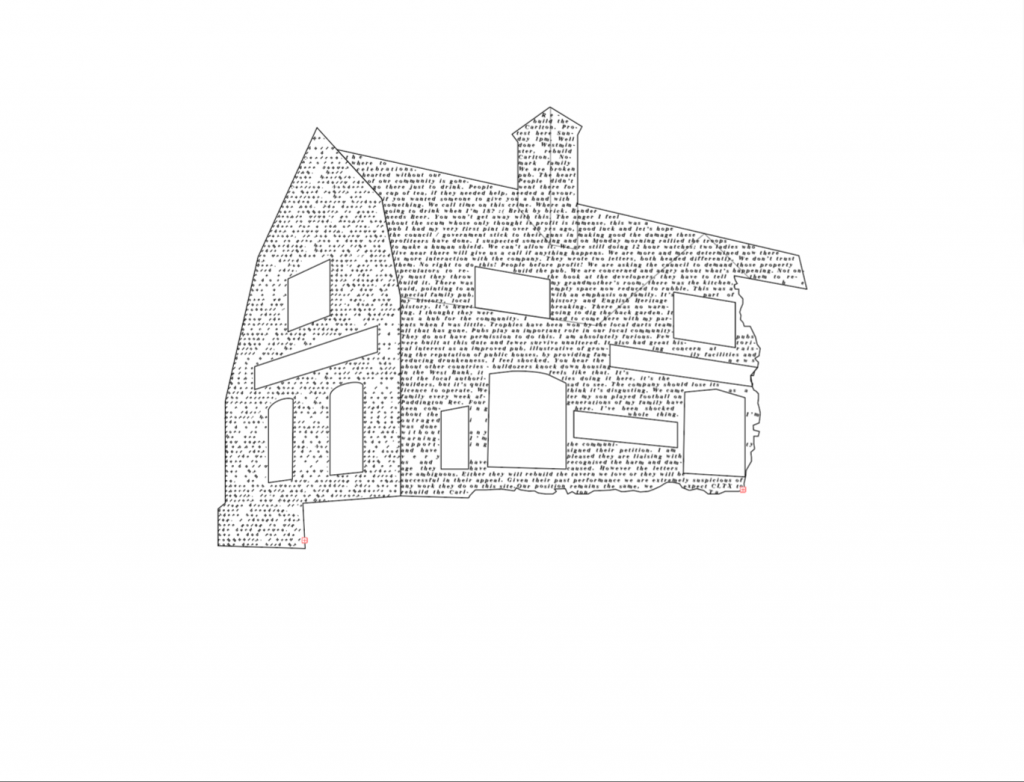
    One of my first experiments focused on the period after the pub had been demolished. I used photographs of the missing building and filled its absent silhouette with publicly available testimonies from people who had spoken about the Carlton and its loss. At this stage, I was interested in whether language and memory could temporarily occupy the space left by the architecture.

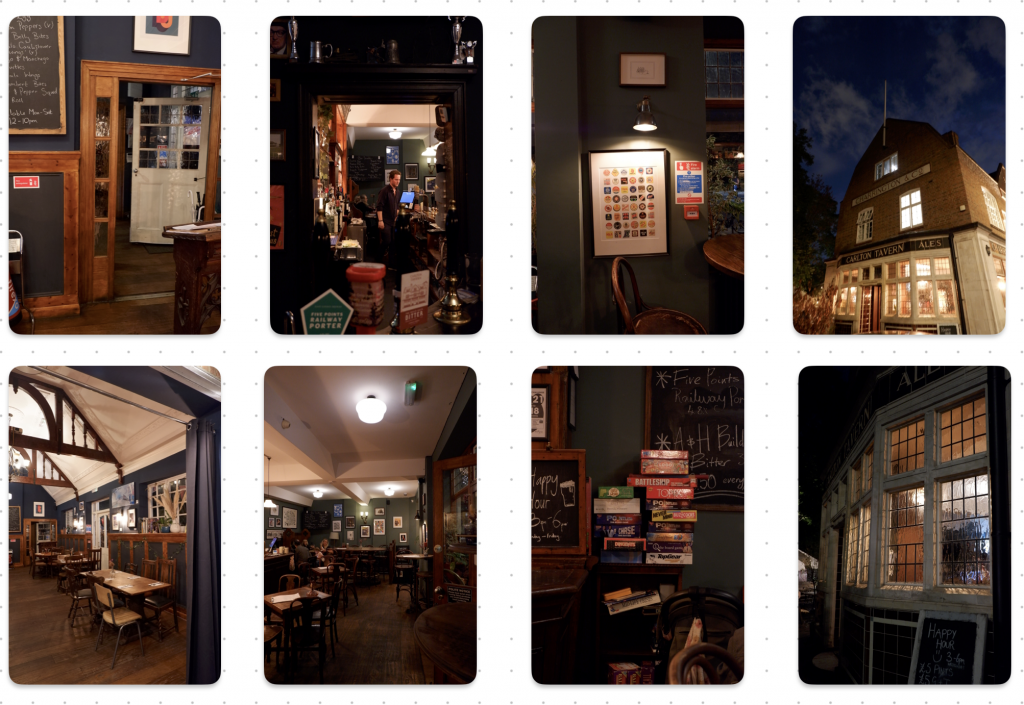
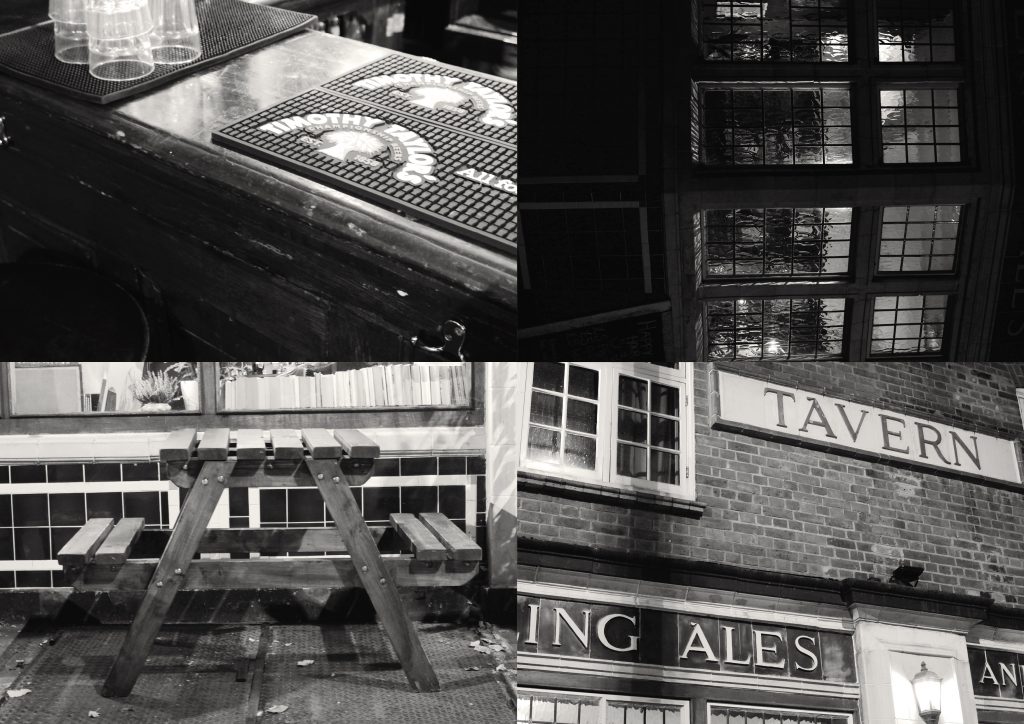
    I then began working with my own photographs of the rebuilt pub. (few examples below)

    I selected a number of images and layered questions over them, focusing on what could and could not be understood through looking at the building alone. These questions became increasingly important as I struggled to access some of the memories and histories associated with the previous Carlton. Rather than trying to answer those gaps, I began using the questions themselves to make my position and limited access more visible.

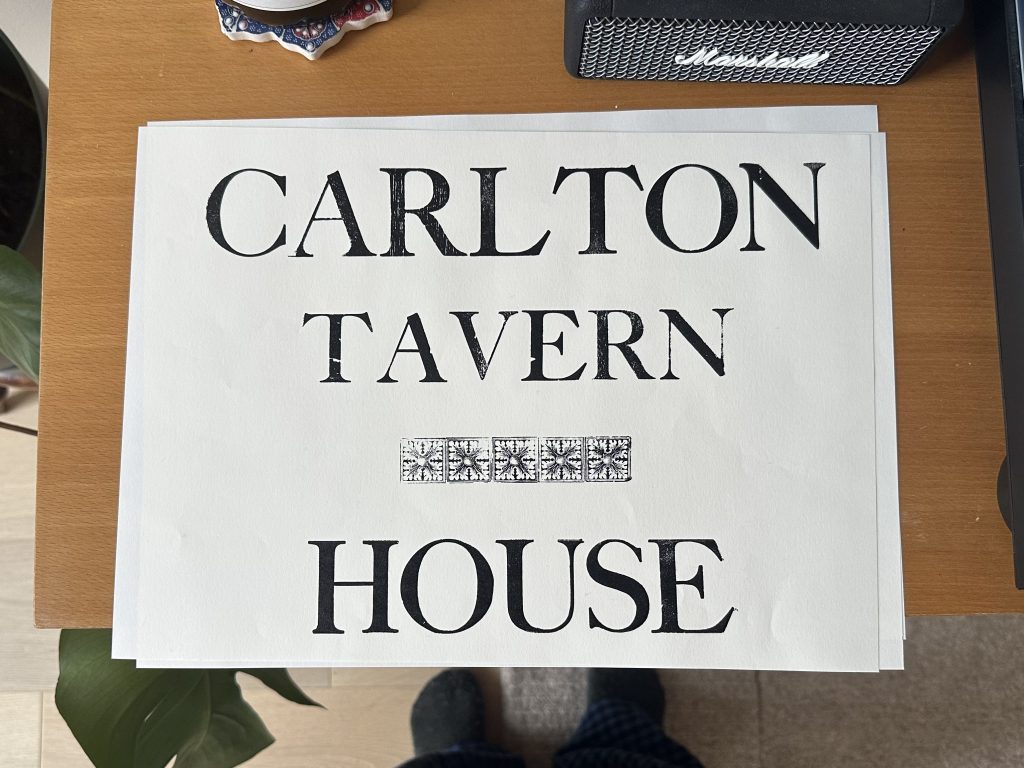
    Alongside this, I experimented with letterpress, trying to find type that felt visually close to the lettering associated with the Carlton. This was a less resolved direction and, looking back, probably came from feeling slightly stuck and wanting to return to making through material and typography. Although it did not become central to the project, it helped me test another way of responding to the visual identity of the site.

    Together, these experiments began to move the work away from simply documenting the Carlton and towards thinking about how absence, testimonies, photography, my questions and material details (in this case typography) could each operate as different traces of the same place.

  • Unit 2 (W1): Triangulating 1 – Studio work initial steps

    Bridging from Dialoguing

    After deciding to focus more directly on place through dialoguing, I began testing what a place might be made up of beyond its physical structure. I used fragments of objects and details from my house, cutting them into line to and puzzle them together into one composition. The experiment was quite literal, but it helped me begin thinking about place as something made up of multiple connected parts rather than one fixed image or identity.

    At this stage, I was thinking about these as bits of place; small pieces of information that belonged to the same environment but communicated different aspects of it.The “puzzle” format suggested that these fragments belonged together, although I was not yet sure whether they could ever form a complete picture.

  • Unit 2 (W1 & 2): Positions through contextualisingggggggg

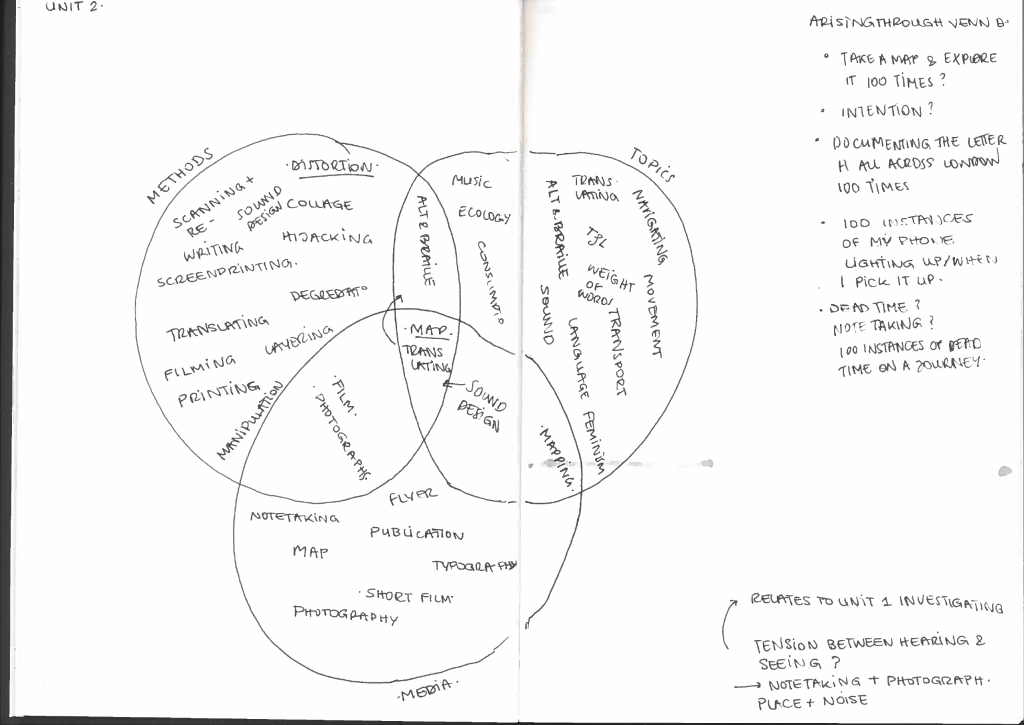
    During the contextualising phase of Unit 2, my project shifted from exploring how sound could be represented graphically toward investigating how sound shapes movement, perception, and experience within space.

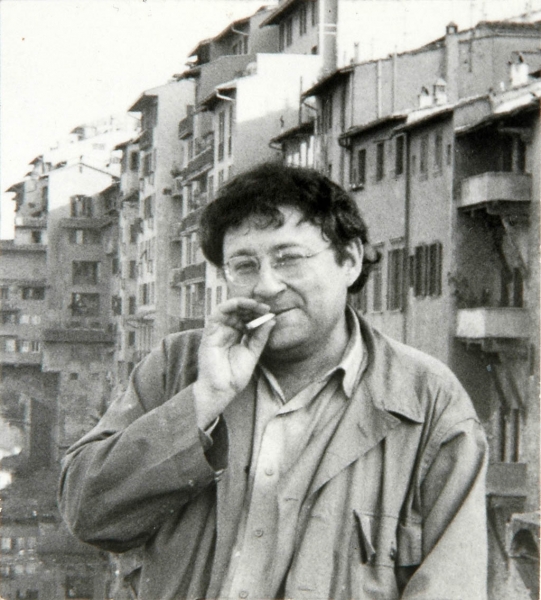
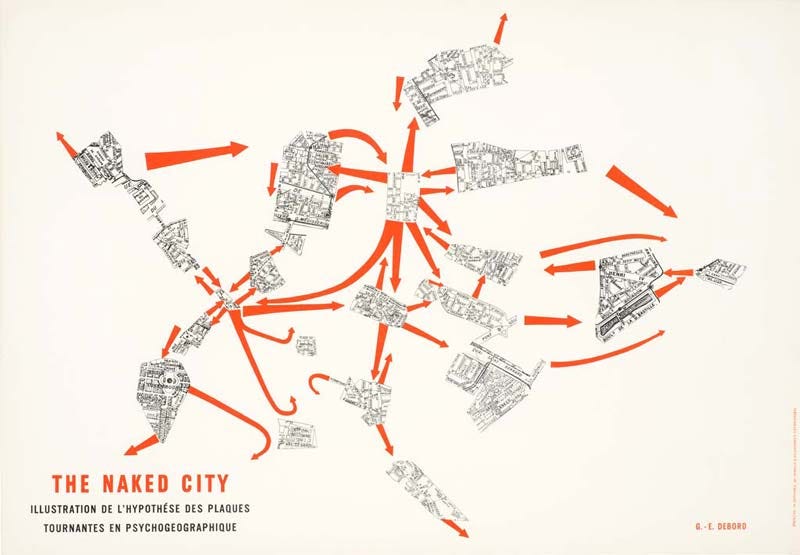
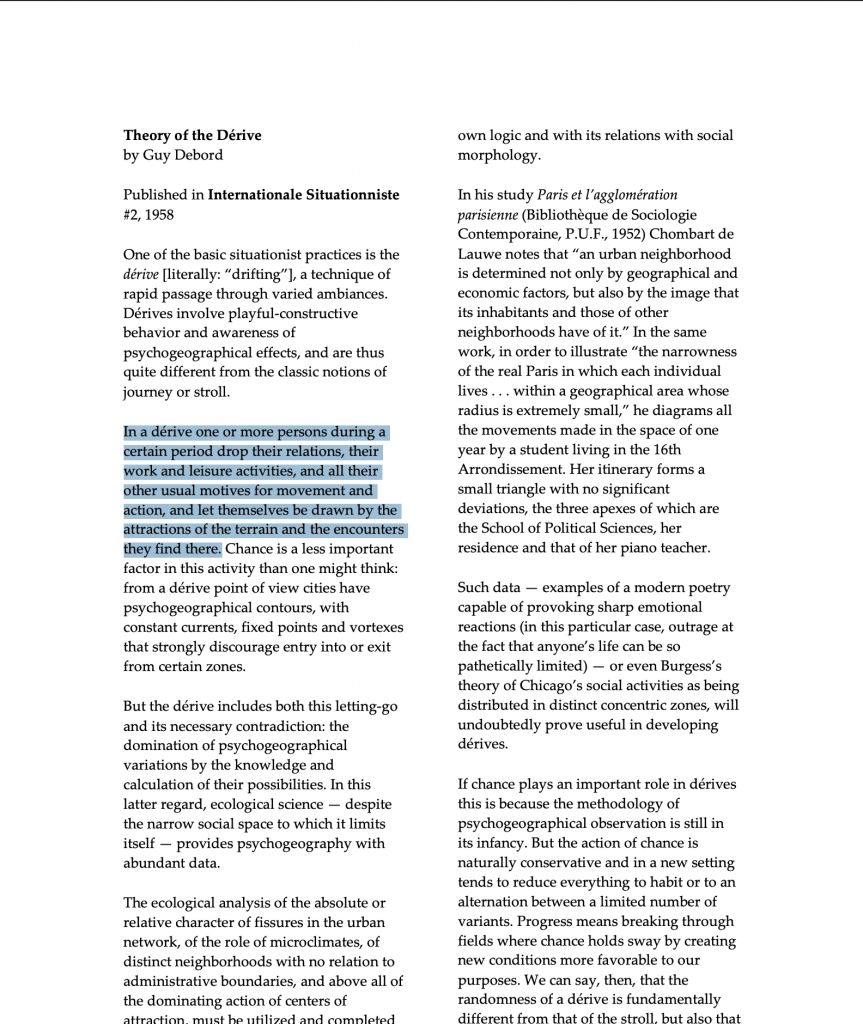
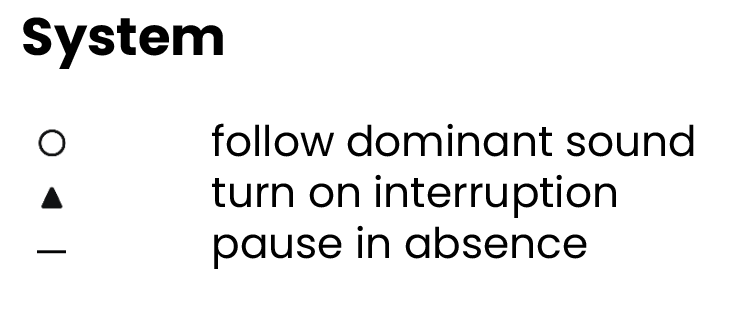
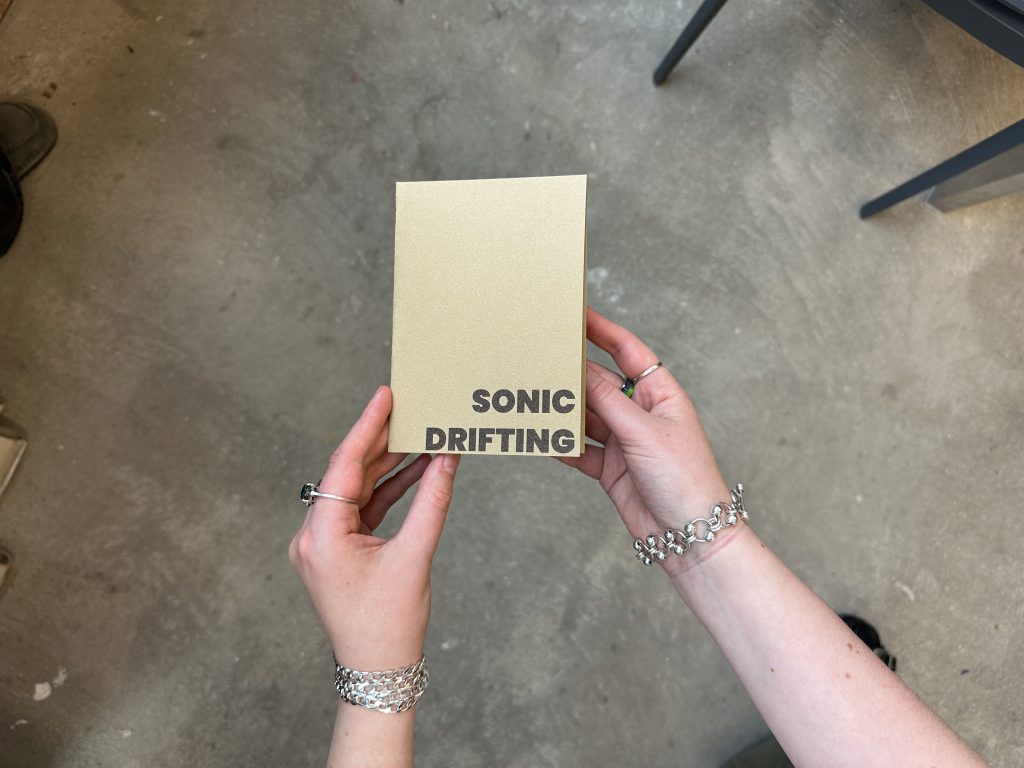
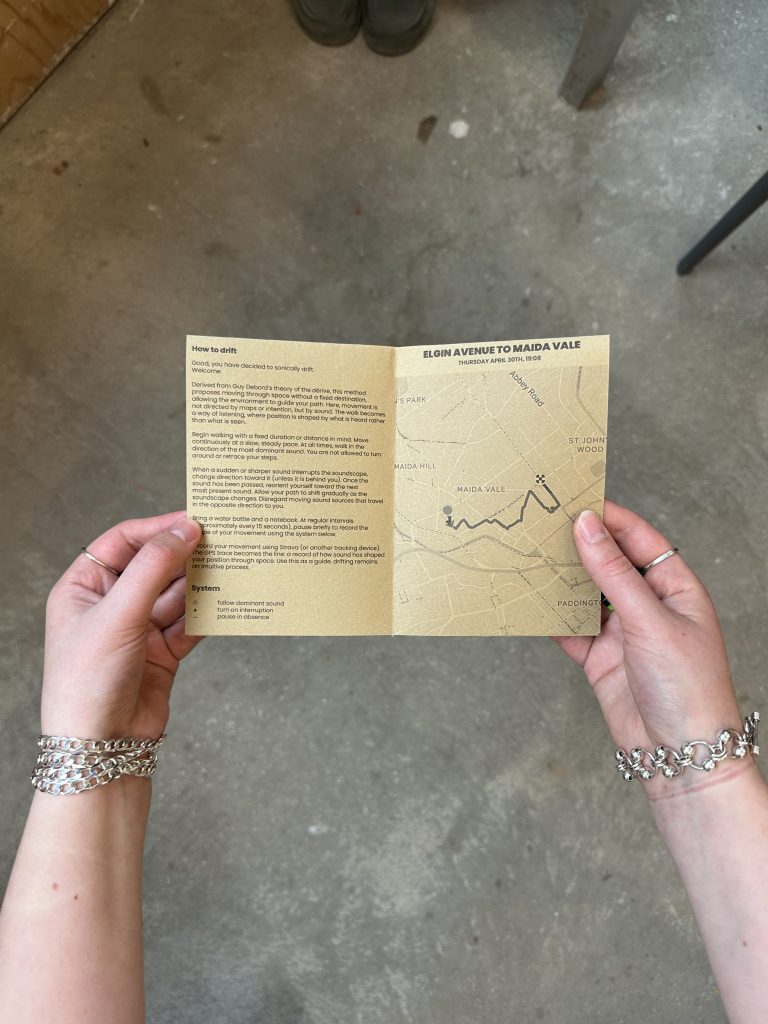
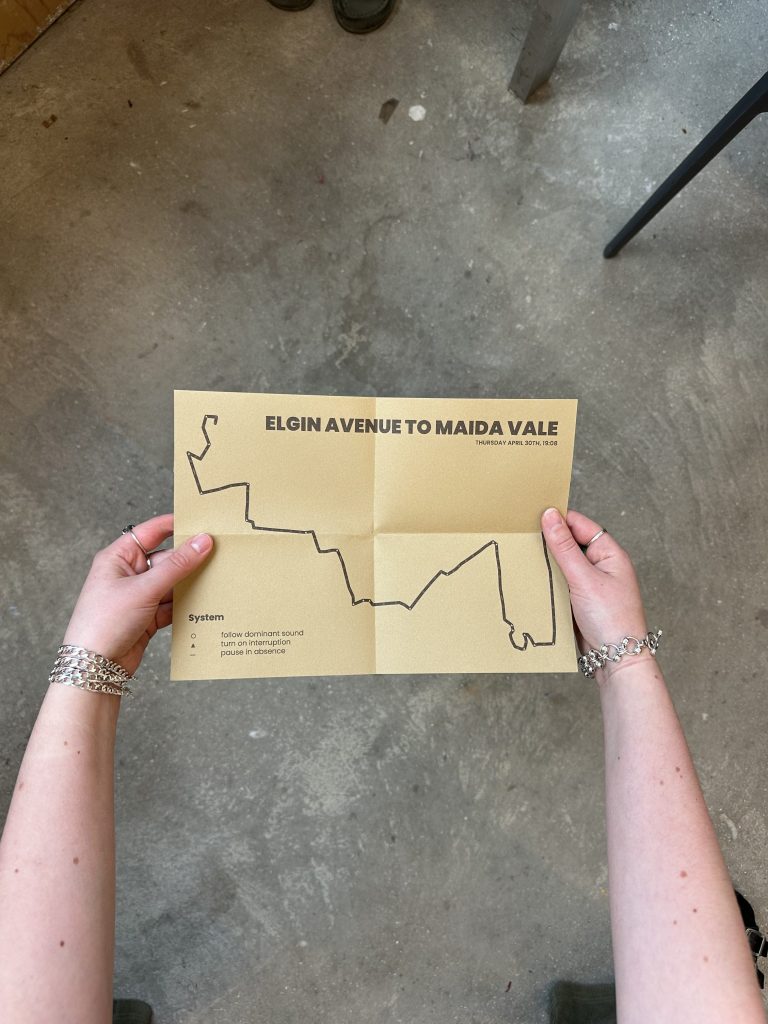
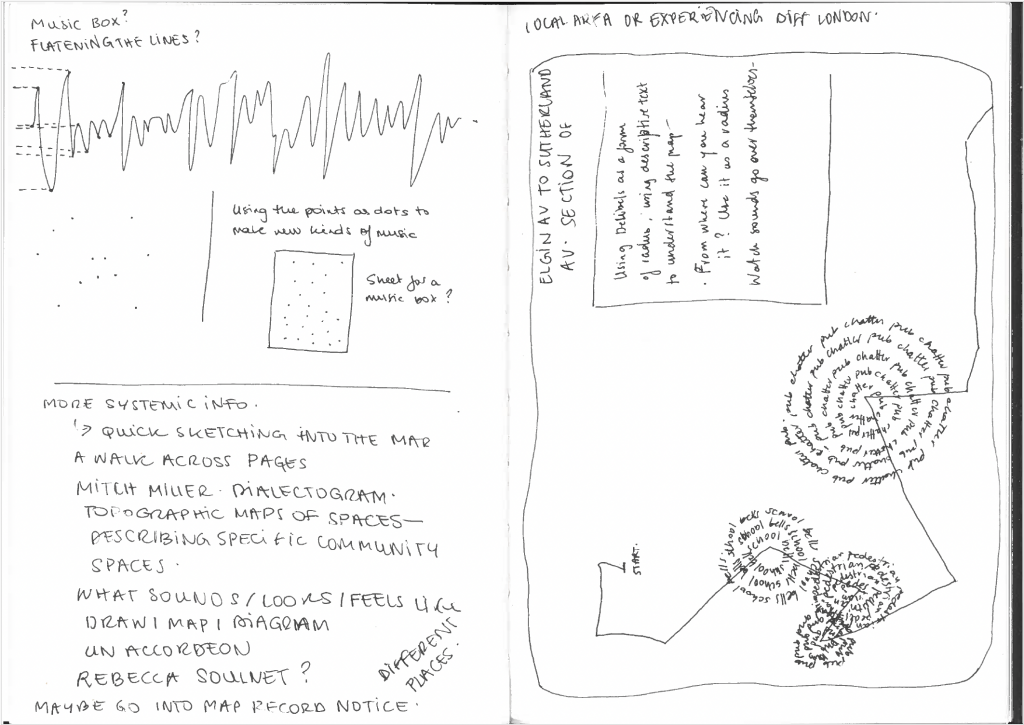
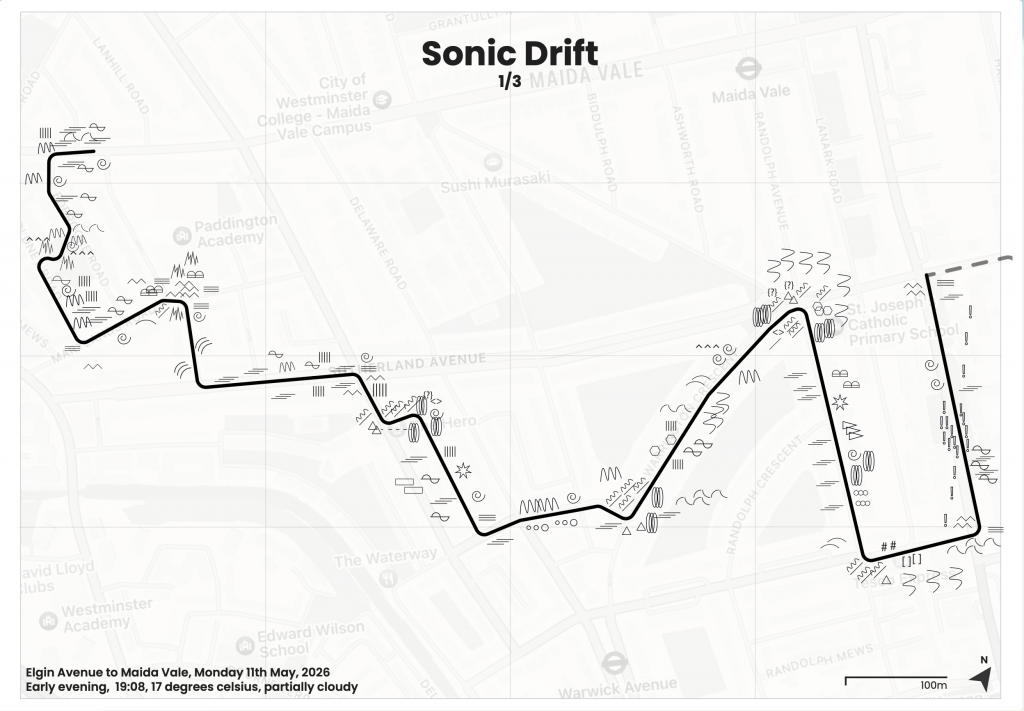
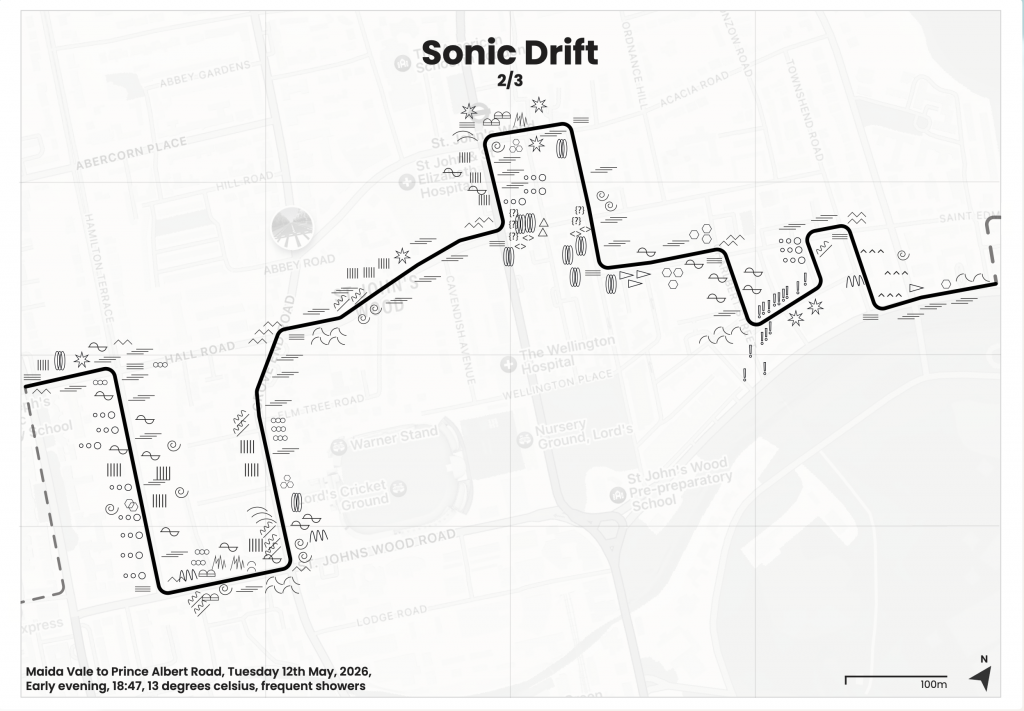
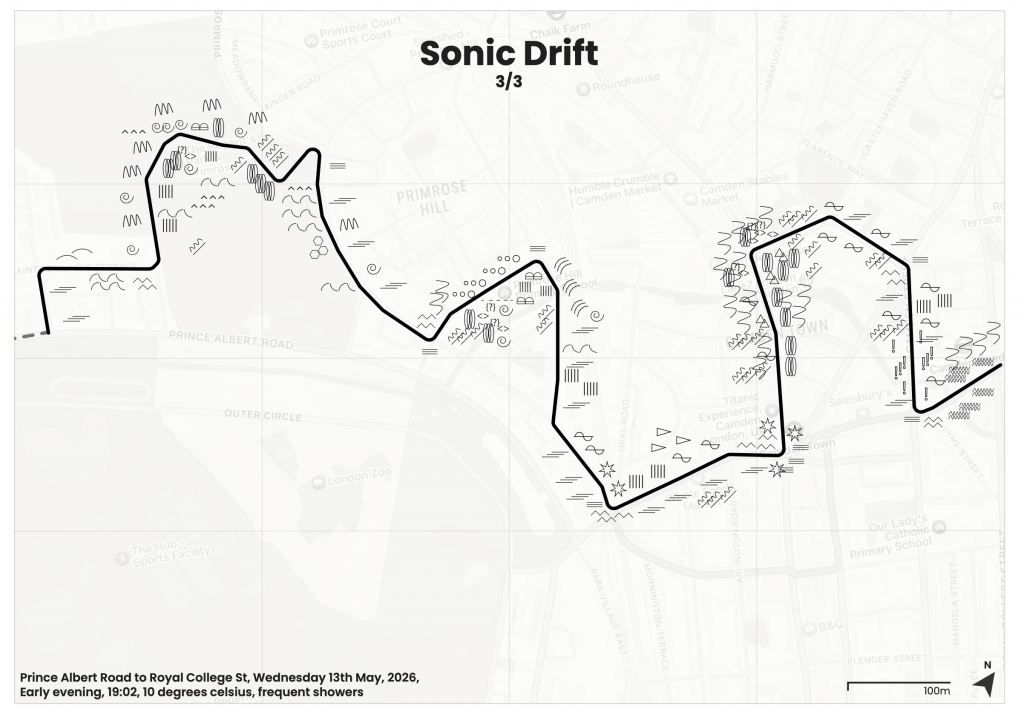
    This development began with Guy Debord’s Theory of the Dérive. Debord’s concept of drifting proposed moving through the city according to atmosphere and encounter rather than predetermined destinations. Interested in translating this idea into a sonic context, I developed a set of instructions for a “sonic drift”, where movement was guided by dominant and interruptive sounds rather than visual navigation.

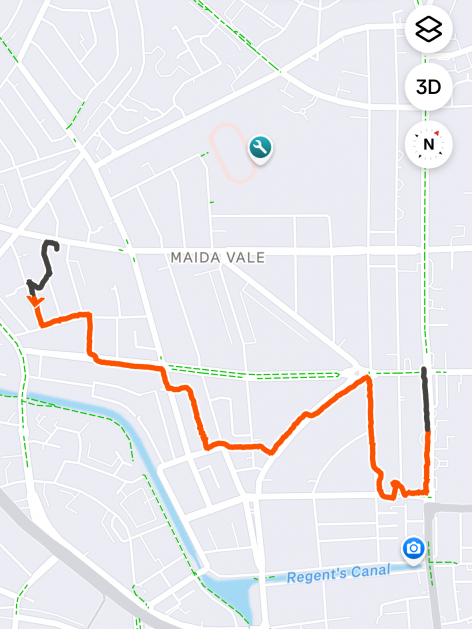
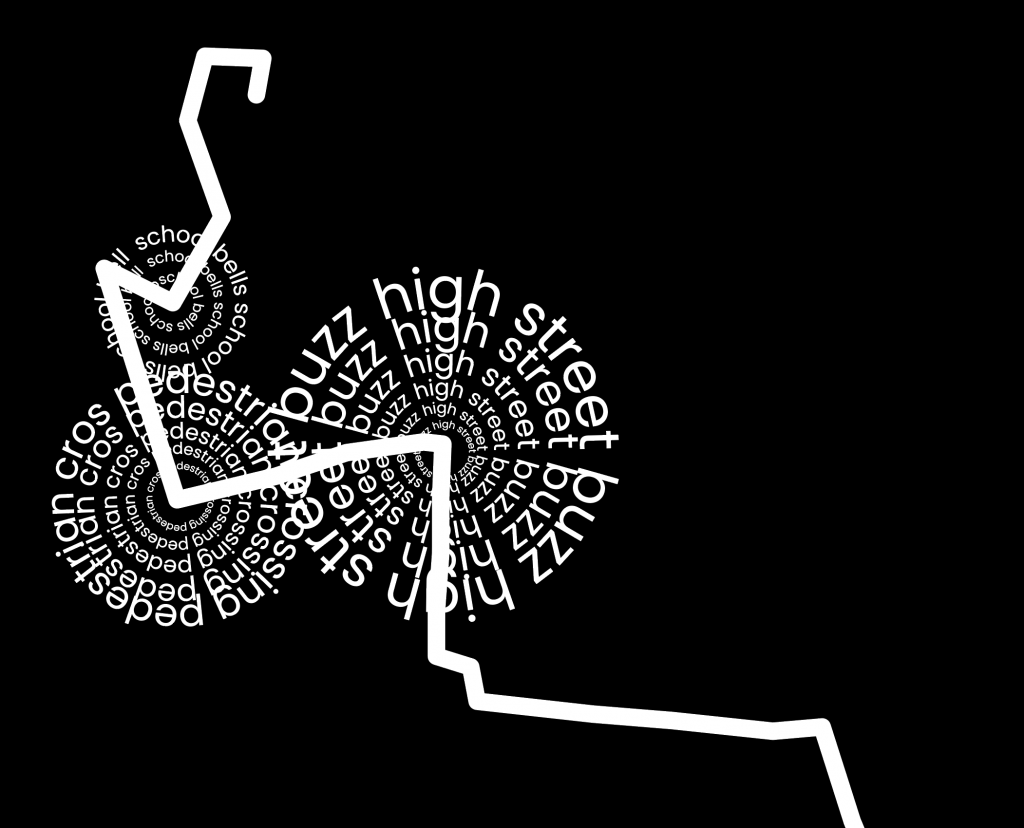
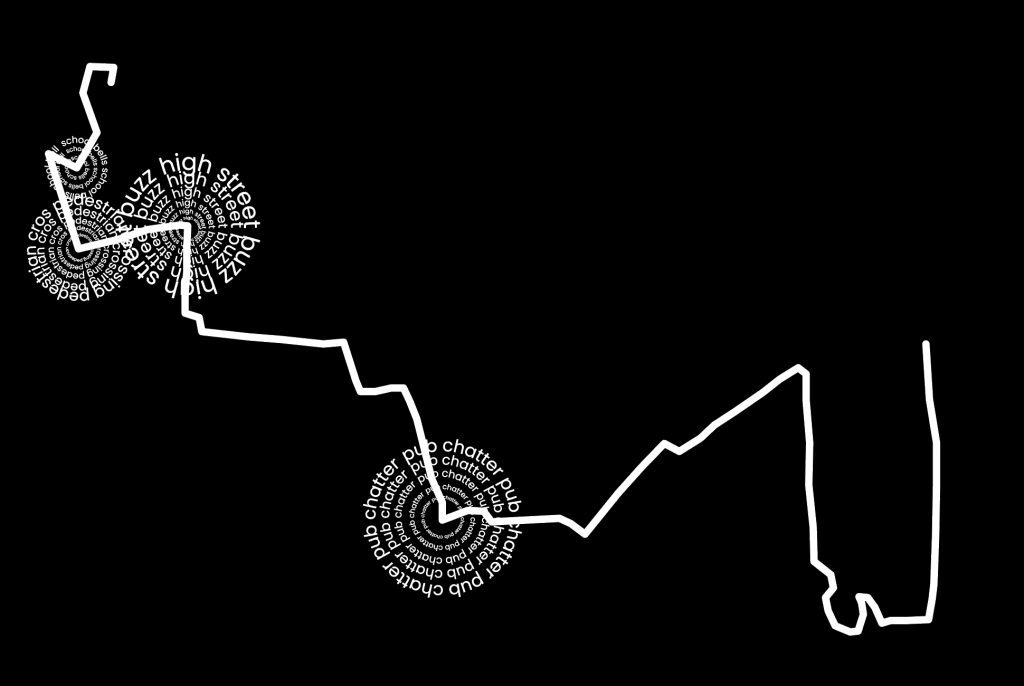
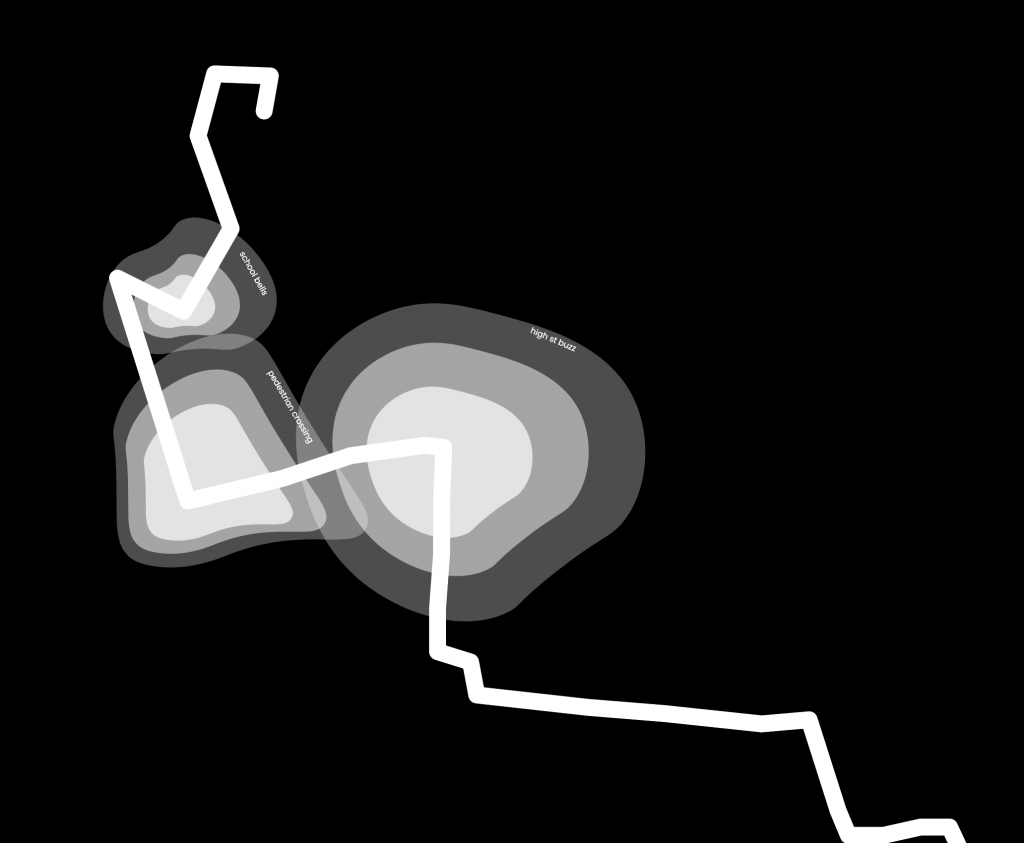
    Using these rules, I undertook a series of sound-led walks through North West London. GPS tracking recorded my routes while I simultaneously documented the sounds encountered along the way. Initially, I was interested in the resulting traces as visual records of movement. However, through testing and critique, I realised that the routes alone revealed very little about the soundscapes that had generated them.

    (insert other steps)

    (screen recording detail)

    Moving on;

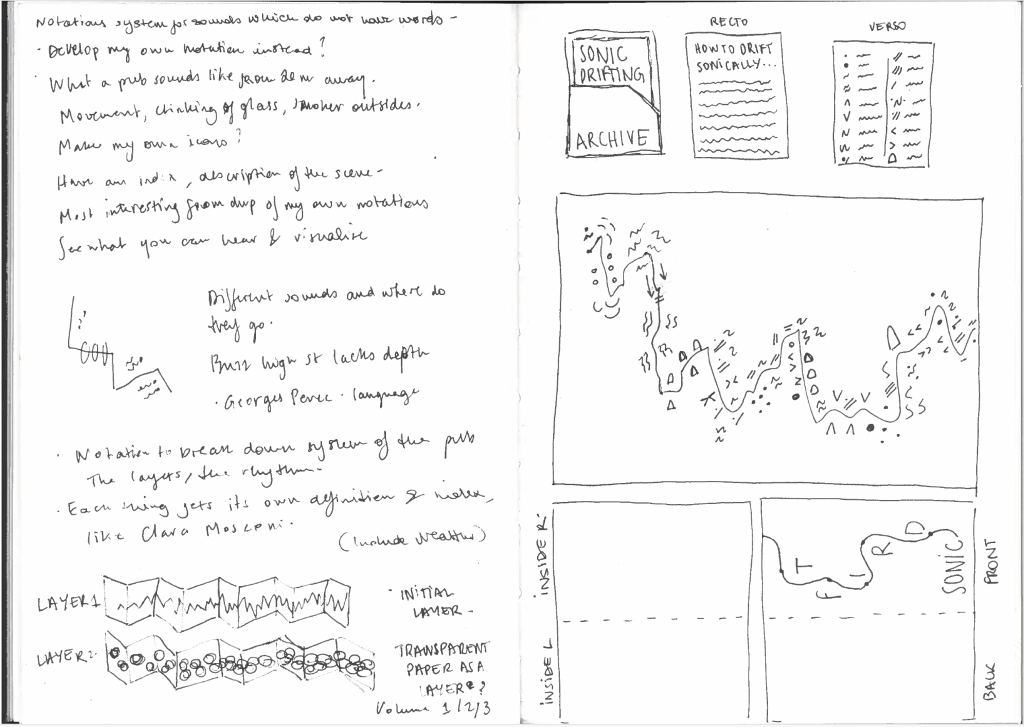
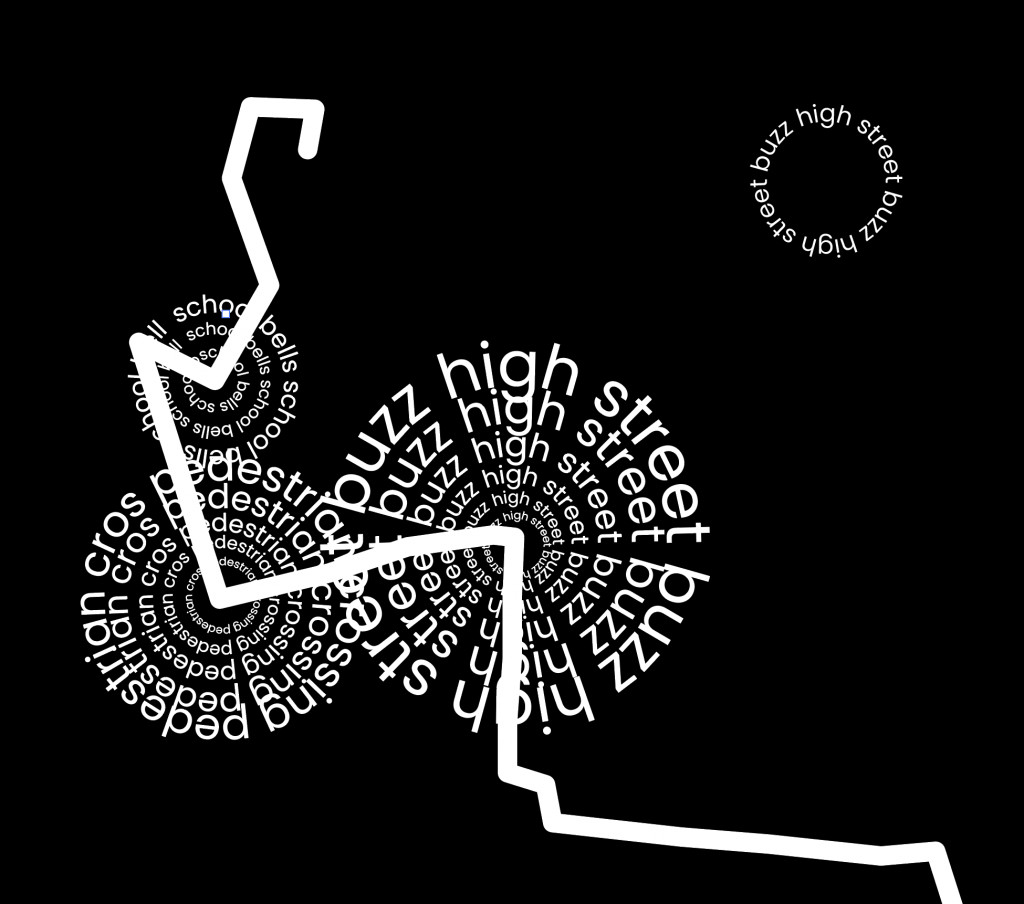
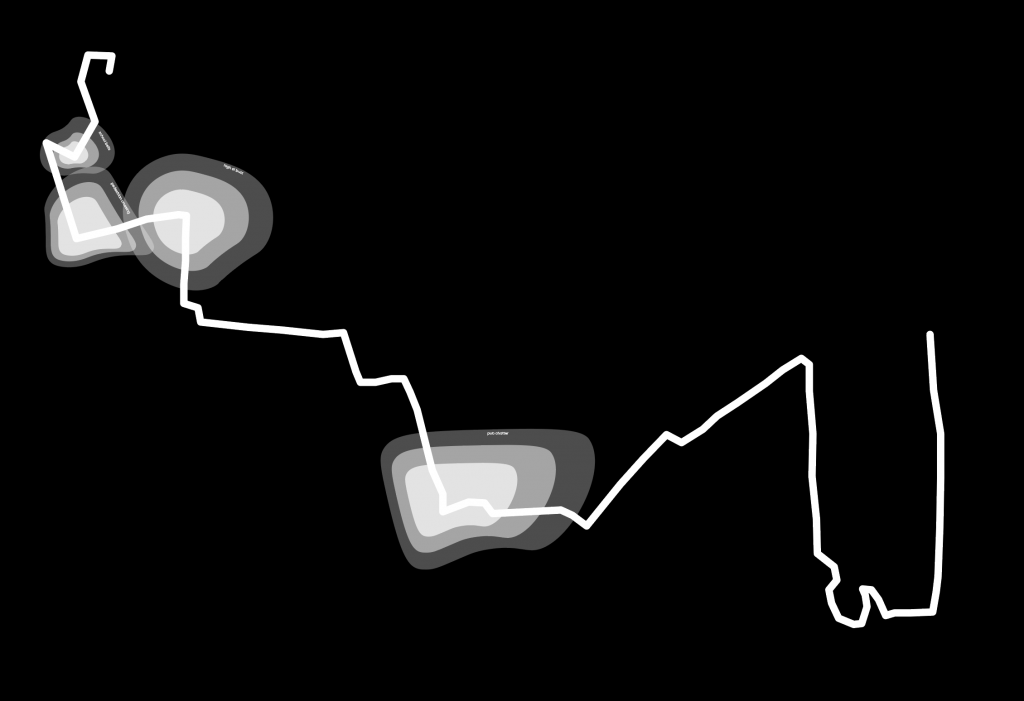
    This became a key turning point within the project. Rather than focusing on movement itself, I became increasingly interested in how the soundscape could be mapped and archived. References such as Rebecca Solnit’s Infinite City and Clara Mosconi’s Paralingual Index (see WR) helped me rethink mapping as a tool for holding subjective knowledge and notation as a method for indexing sensory experience.

    (include steps here)

    I made the graphic notation in reference to computer languages, specifically html, echoing to a very clear system.

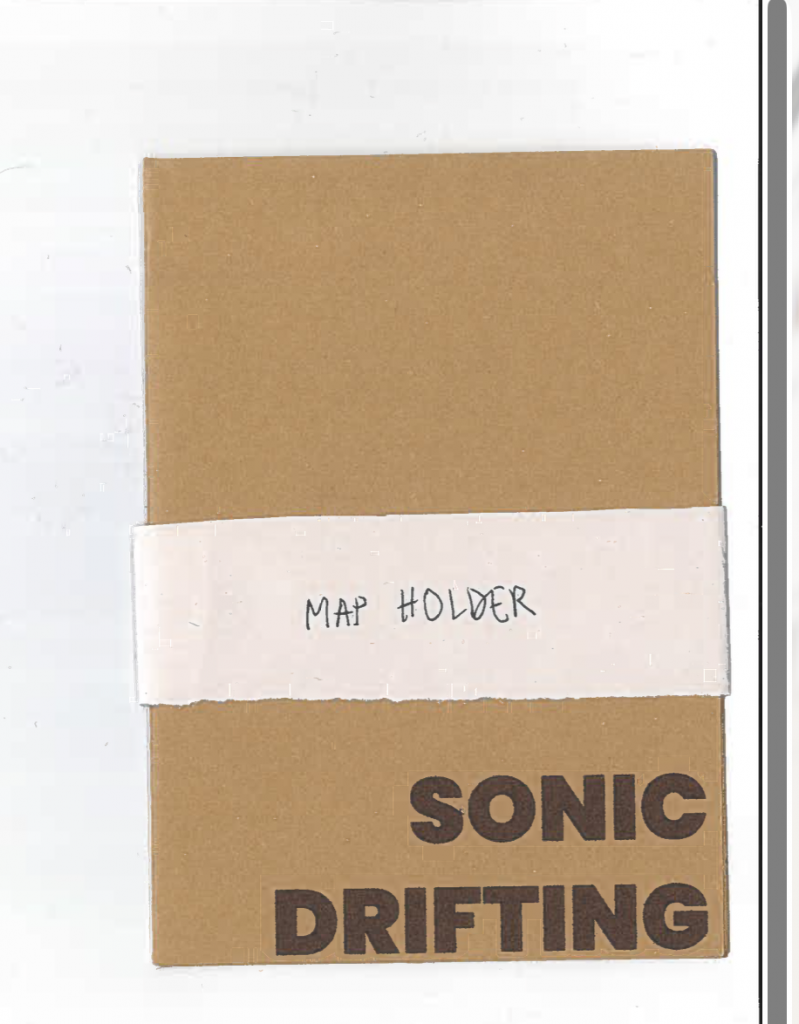
    The final outcome took the form of three maps generated through separate sonic drifts. Together, they create an archive of auditory perception, combining GPS traces with a notation system that records the sounds encountered throughout each walk. Rather than functioning as conventional maps, the works attempt to communicate the sonic identity of a place at a particular moment in time.

  • Unit 2 (W1 & 2): Positions through iteratingggggggg

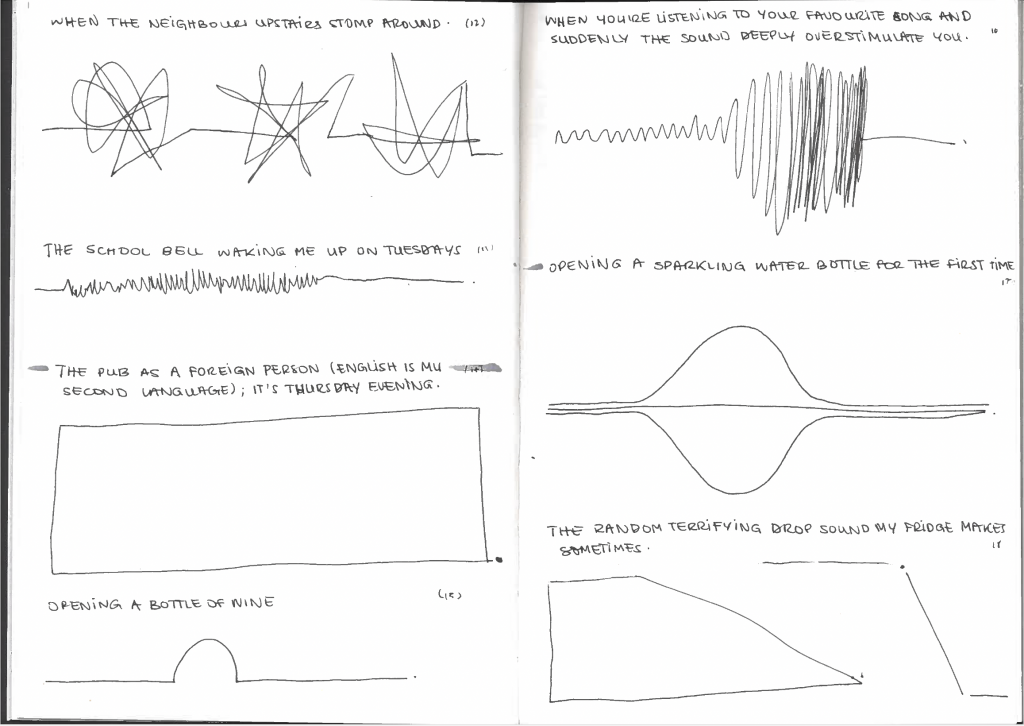
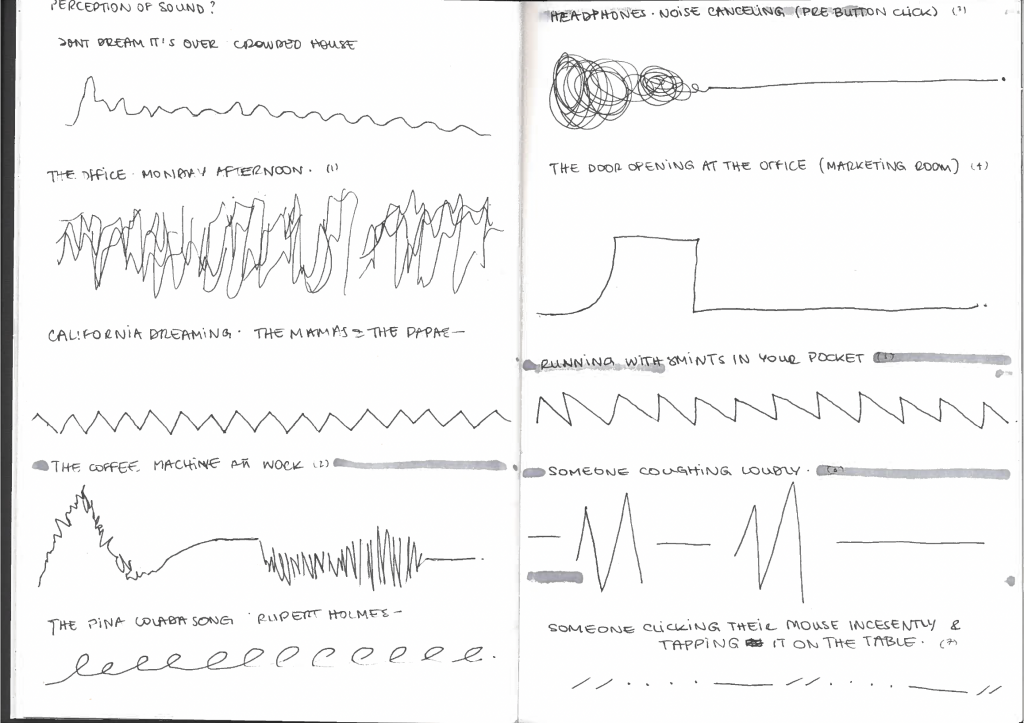
    Initial ideation and drawings,

    Development into 100 iteration publication;

    Moving forward,

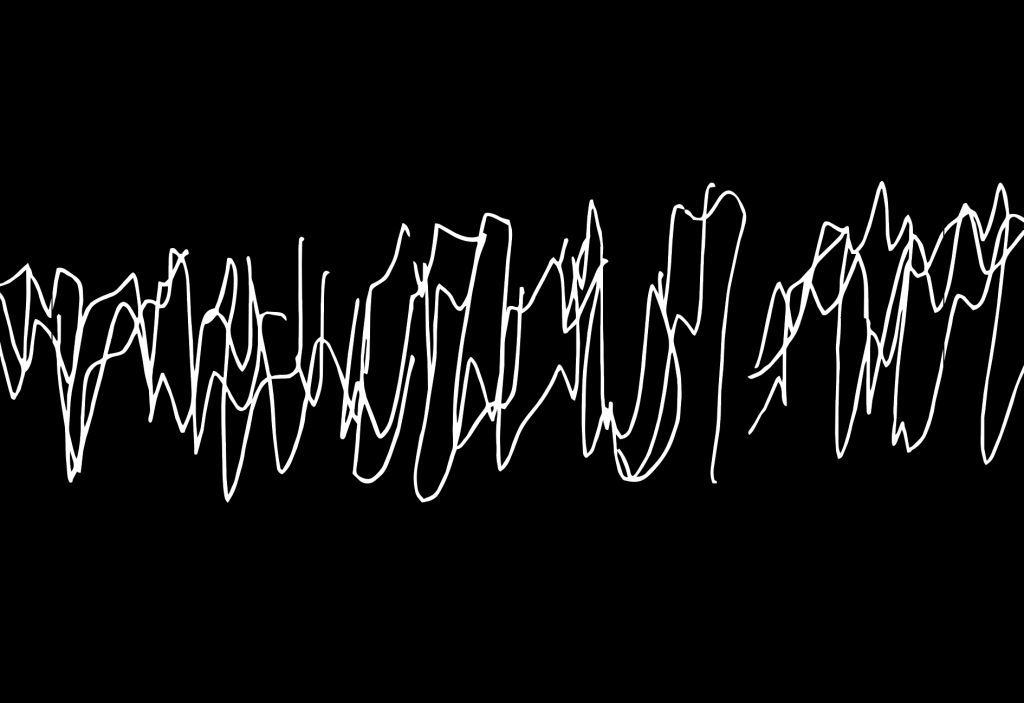
    Flat, isolated drawings not reflecting “soundscapes” by Schafer. Schafer describes soundscapes as; acoustic environment, something spatial, atmospheric, and constantly shifting.(see written response for further explanation).

    Above, attempts at layering sounds on a flat surface, which were not pursued.

    Another explore medium below;

    Chosen direction

    Layering sounds to reflect soundscapes

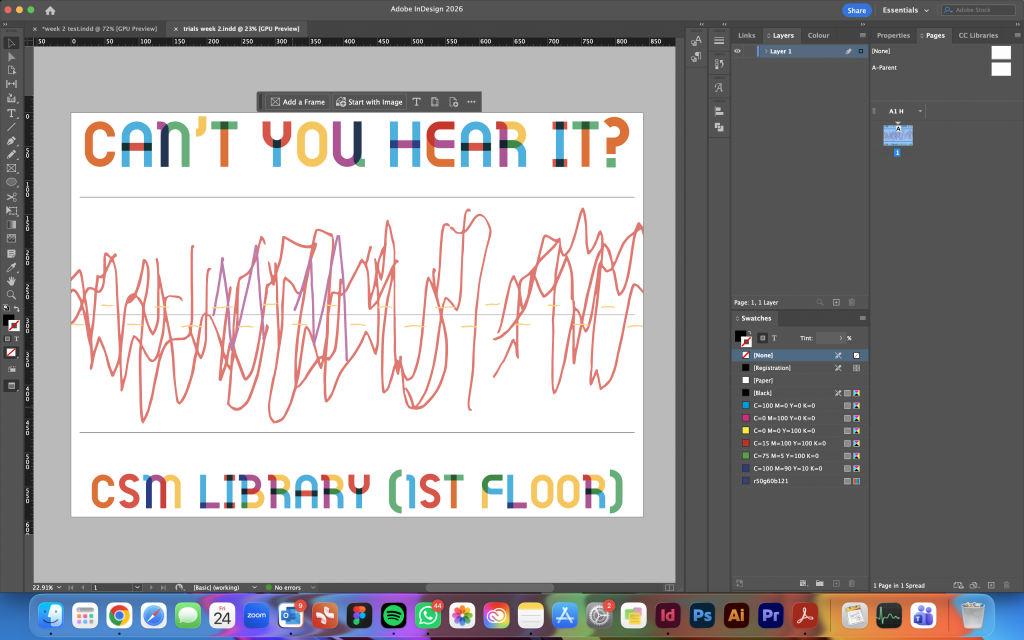
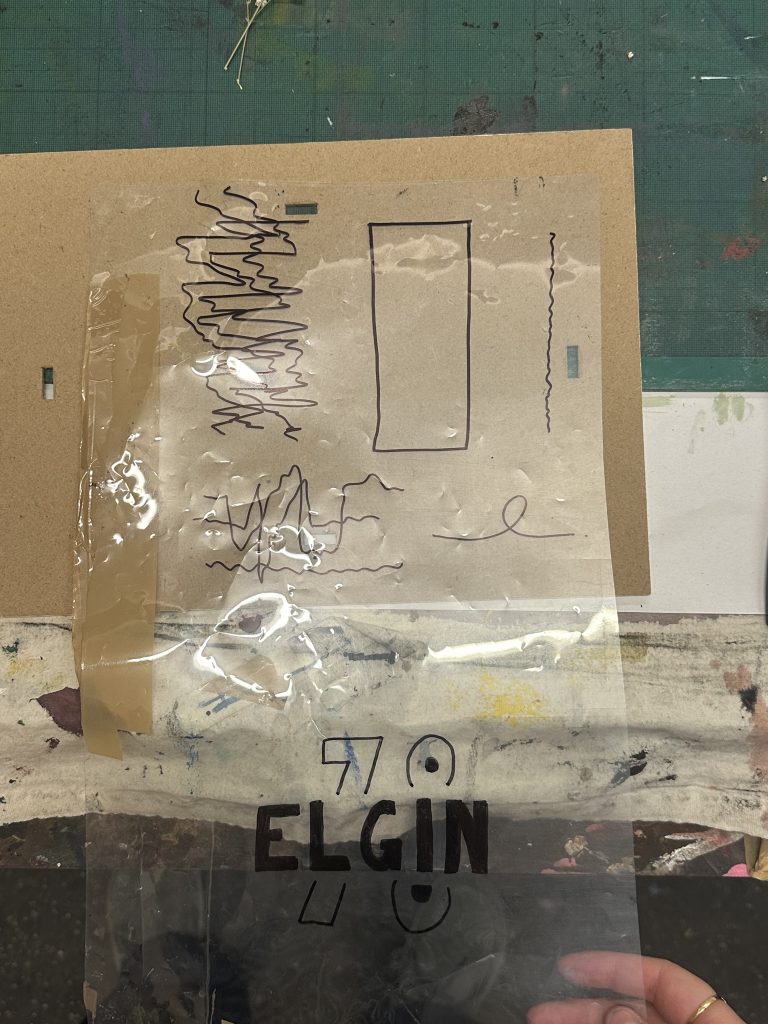
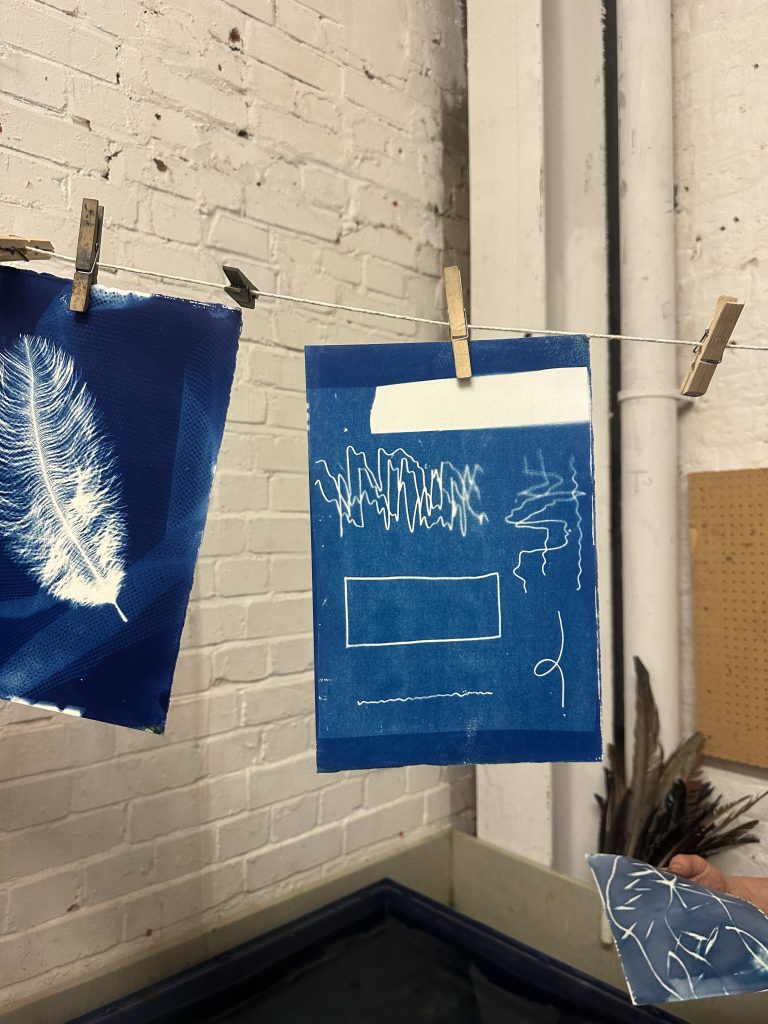
    Choosing a specific place a at specific time in order to dissect its sonic layers, portraying them on transparent paper to reflect the organic sonic identity of the place. The booklets feature a “scan to listen” QR code, for viewers to understand the space themselves.

    (photos)