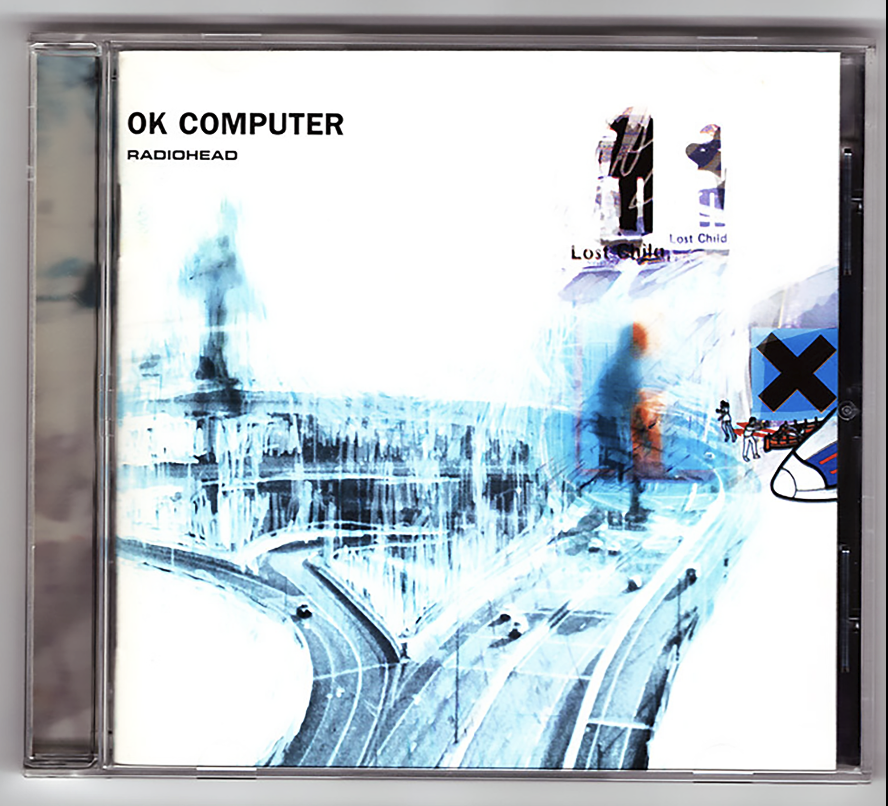
I went to Radiohead’s exhibition in Oxford. This is where this project begins.
While visiting the exhibition, I read about the process used by the artists to produce the artwork for OK Computer. Stanley Donwood and Thom Yorke described a method based on repeatedly printing and scanning images, allowing the machine to gradually alter the image through distortion and degradation. The process was simple but systematic, and the final outcome was partly determined by the behaviour of the scanner and printer rather than by direct artistic control.
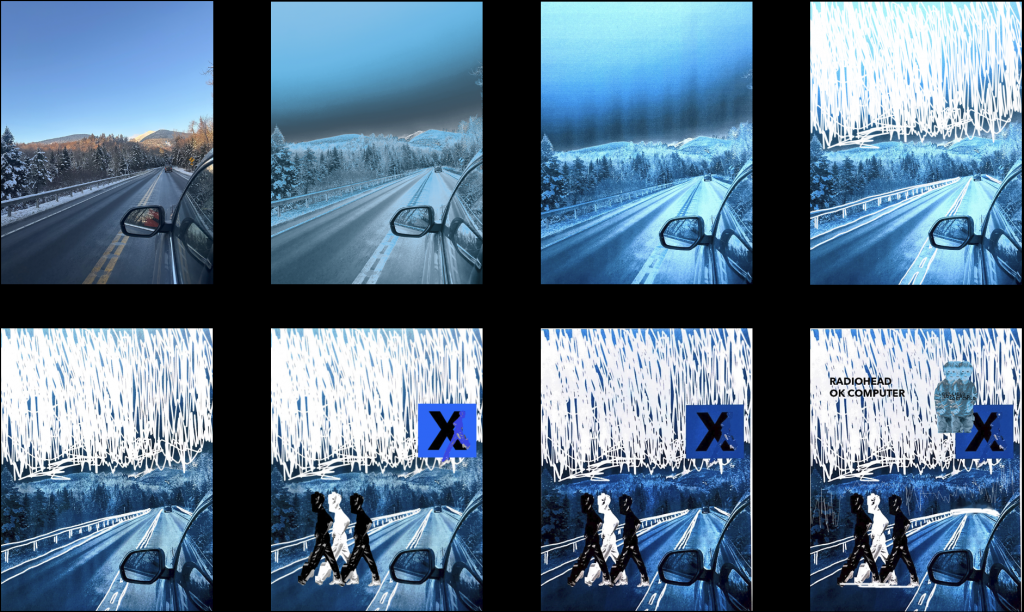
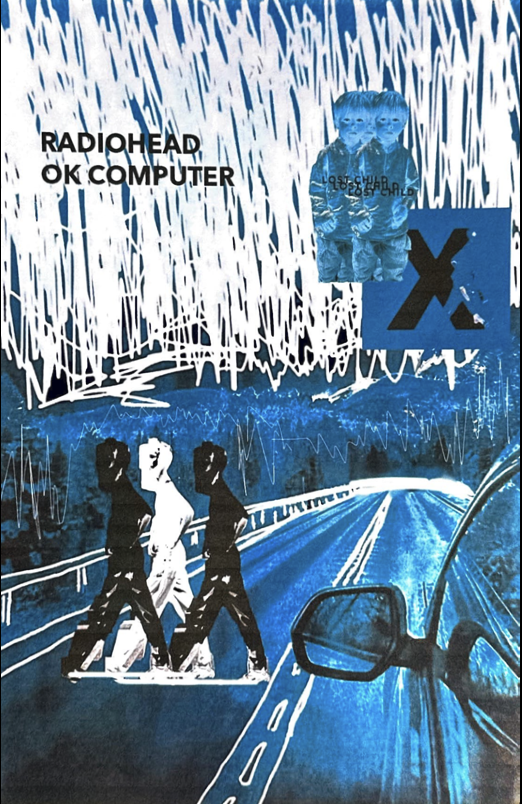
In their creation of OK Computer, Donwood and Yorke (1997) used a strict print–scan loop, allowing the machine to make certain decisions for them. Inspired by this approach, I decided to make my own copy of the artwork using a similar method. During this first week I recreated the image through repeated cycles of printing and scanning, using Photoshop to assist the process and adjust certain elements between iterations.
Very quickly, the image began to change in ways I did not fully anticipate. Colours intensified, particularly the blues, while some details disappeared and others merged together. Each new scan slightly altered the previous version, producing a gradual drift away from the original image.
What I found most interesting about this process was how it challenged my instinct as a designer to maintain control over the outcome. Normally, digital tools allow constant correction and refinement, but here the machine was introducing unpredictable changes that I had to accept and respond to.
This made me begin asking a series of questions about authorship and control in design.
How much control do we actually need in order to feel confident in our work?
What happens when tools resist us instead of obeying us?
That’s all for week 1.
Leave a Reply