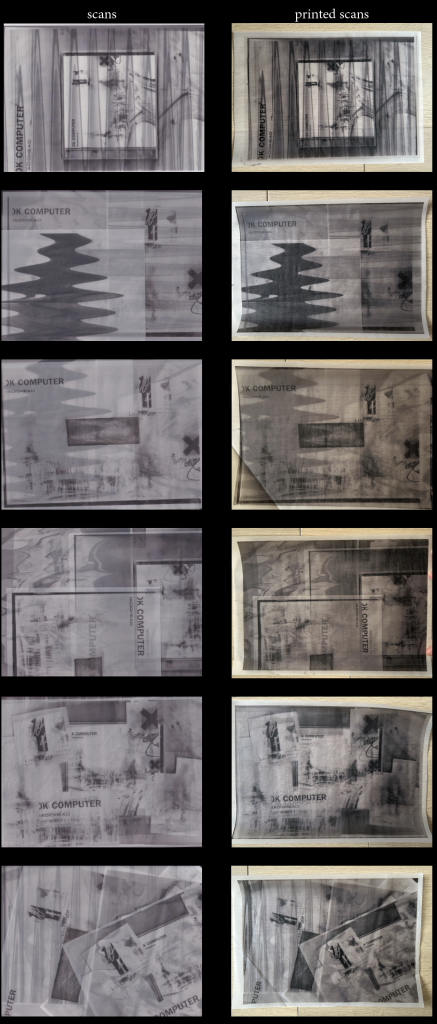
Building on the previous week’s experiments, I began layering the printed scans on top of one another using tracing paper. Rather than producing new distortions through scanning alone, this stage introduced depth through accumulation. Multiple iterations could now coexist within a single image.
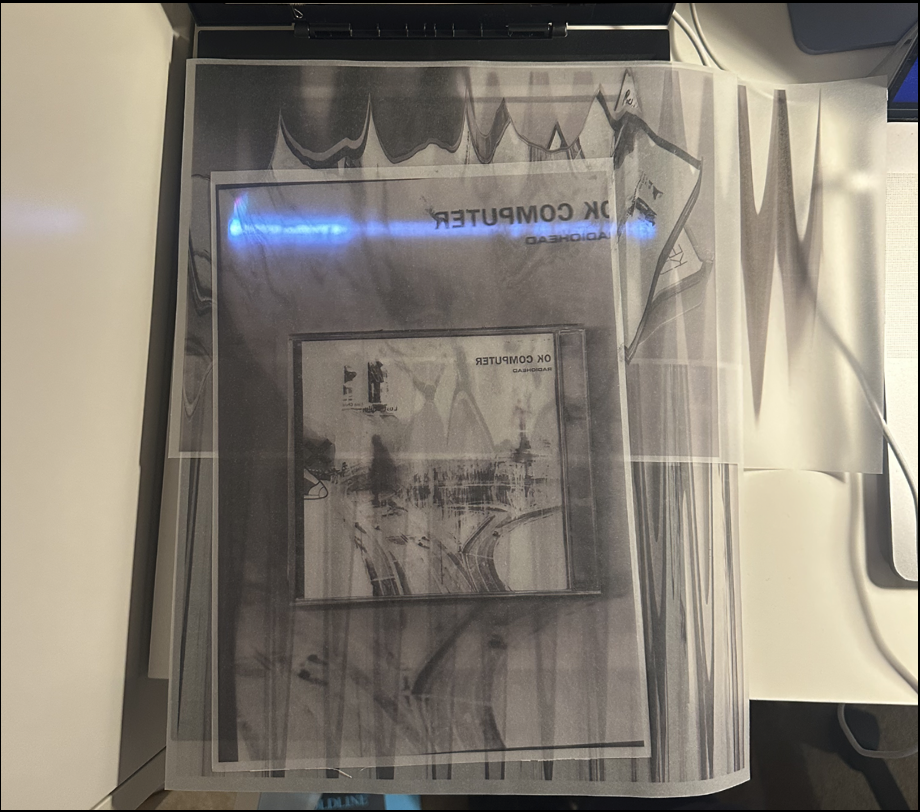
As the layers built up, fragments of earlier scans became visible through the tracing paper. The image started to feel less like a single composition and more like a record of the process itself.
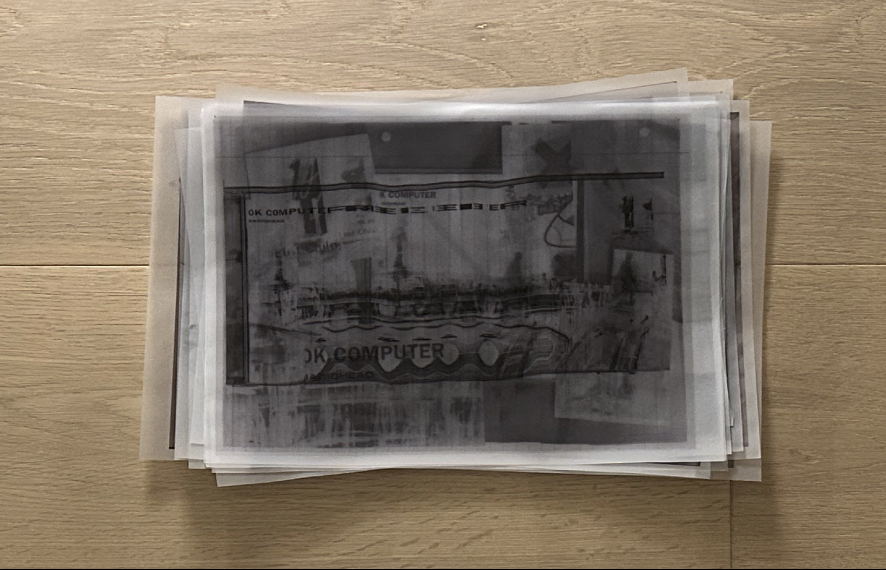
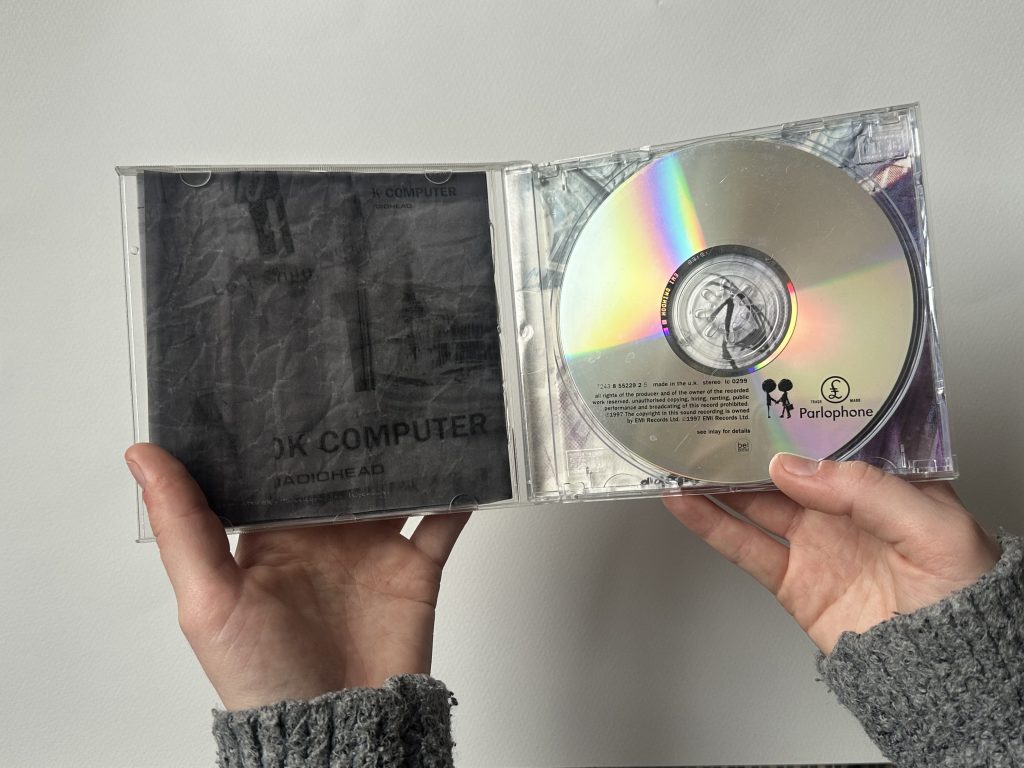
At this point, while looking at the growing stack of printed pages, I had the idea to return the work to its original format. Instead of presenting the iterations as separate images, I decided to reconstruct them as a CD cover.
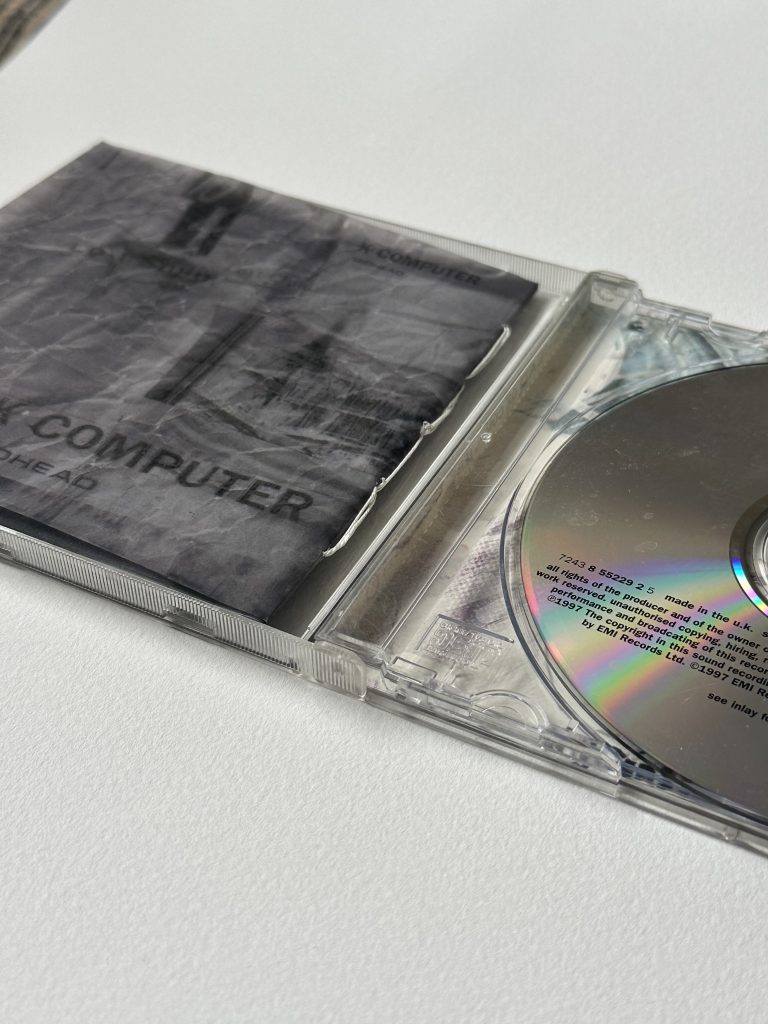
Using the layered tracing paper prints, I produced a new version of the OK Computer booklet and cover. The distortions created through scanning, printing, and layering were now embedded within the physical structure of the CD case. In this sense, the work returns to its starting point, but transformed through repetition and process.
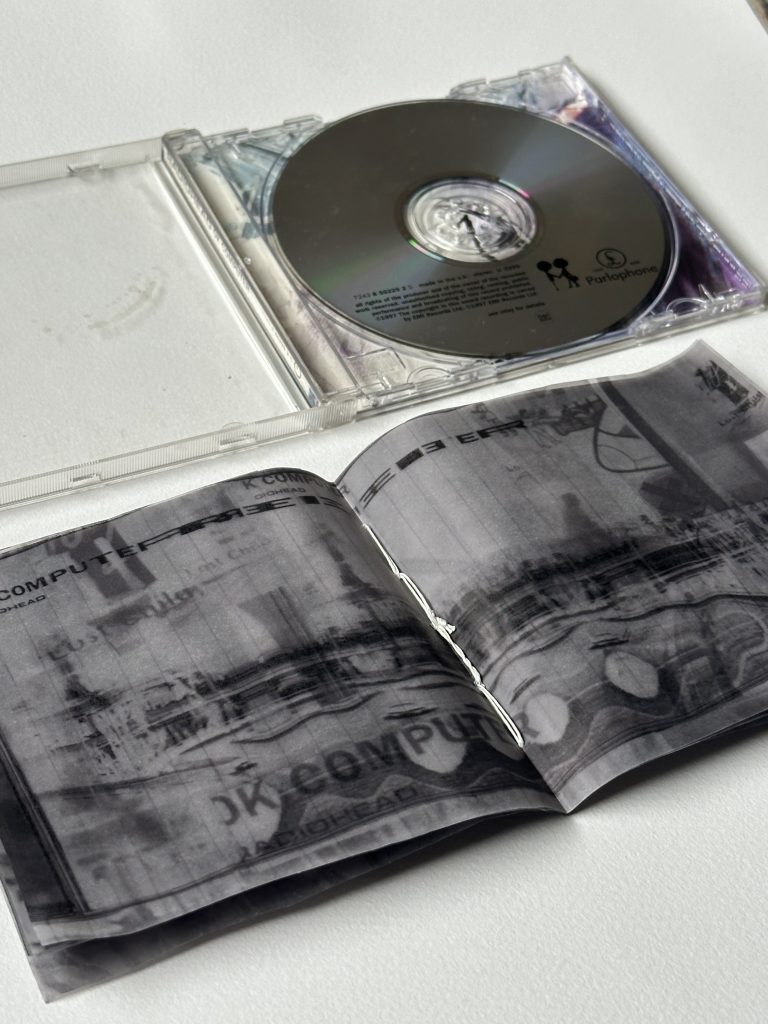
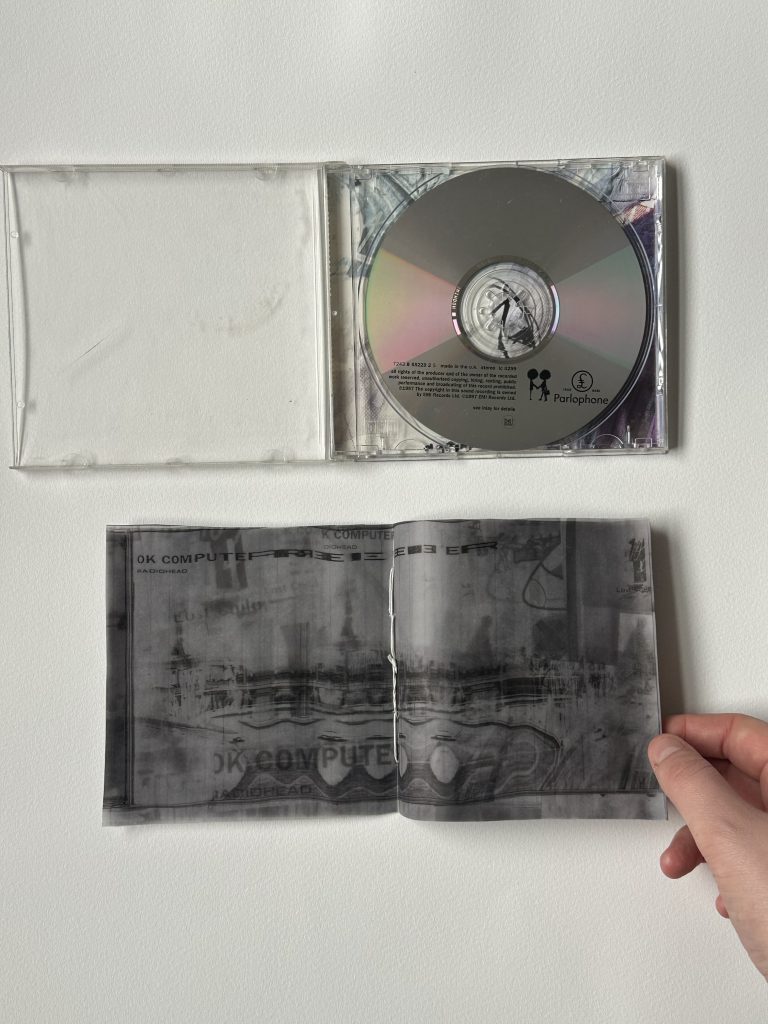
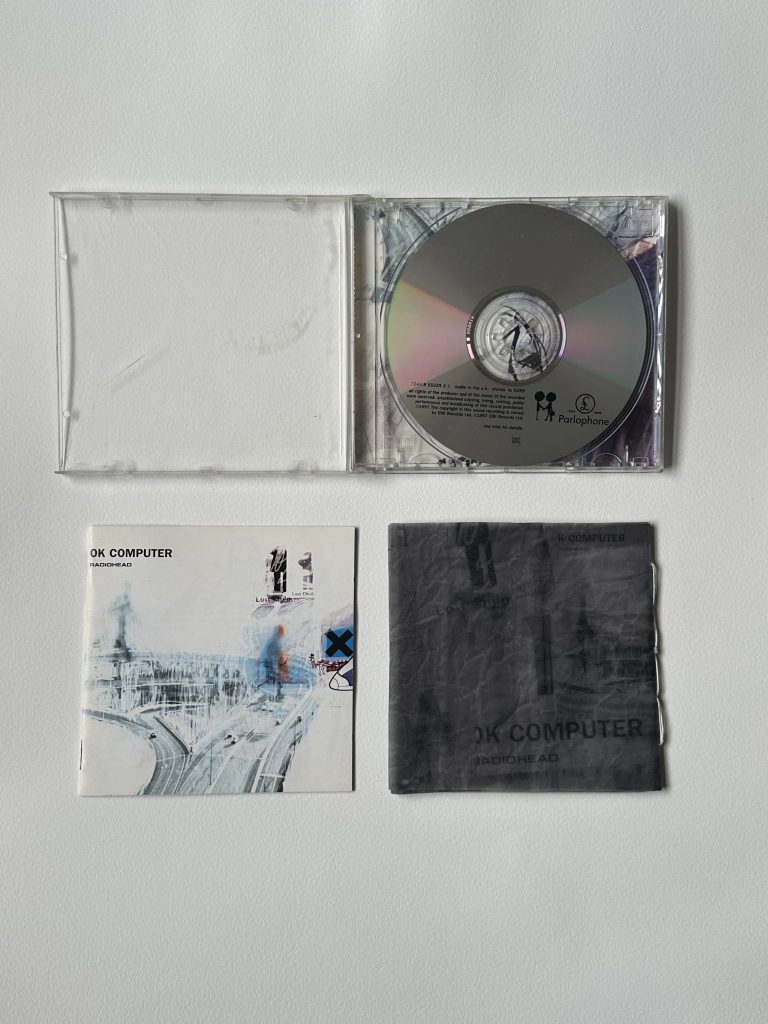
During the final crit, however, feedback suggested that presenting the booklet on its own felt incomplete. When revisiting the original OK Computer booklet, it was proposed that I incorporate some of its textual elements, such as the song lyrics, to better contextualise my version.
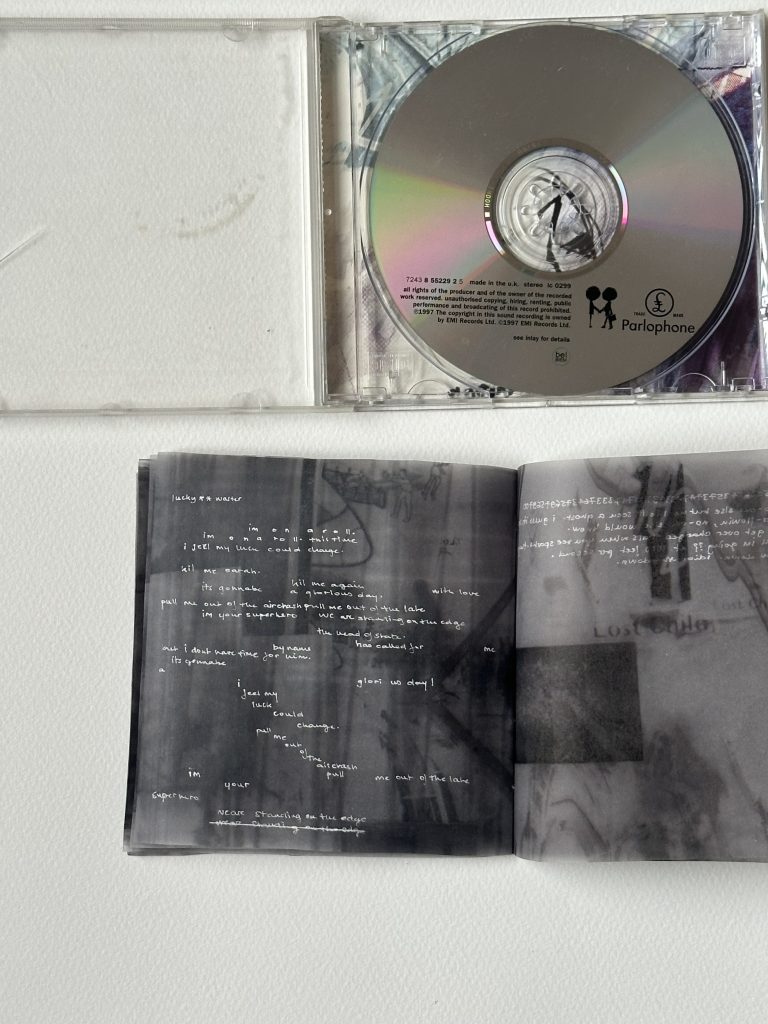
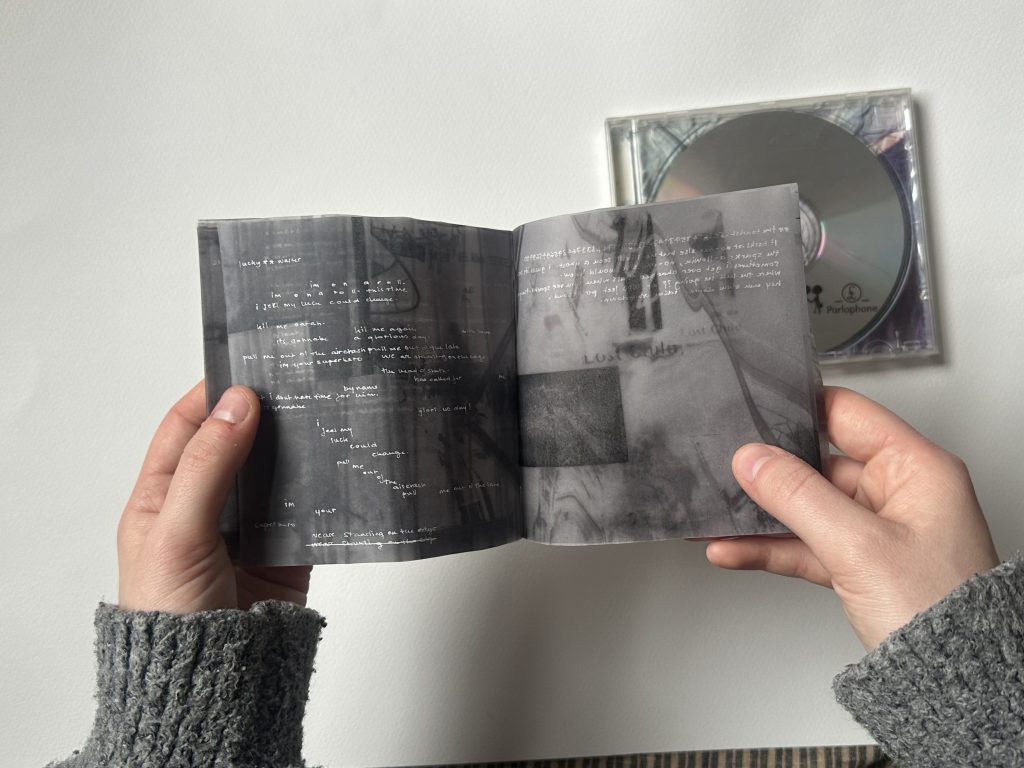
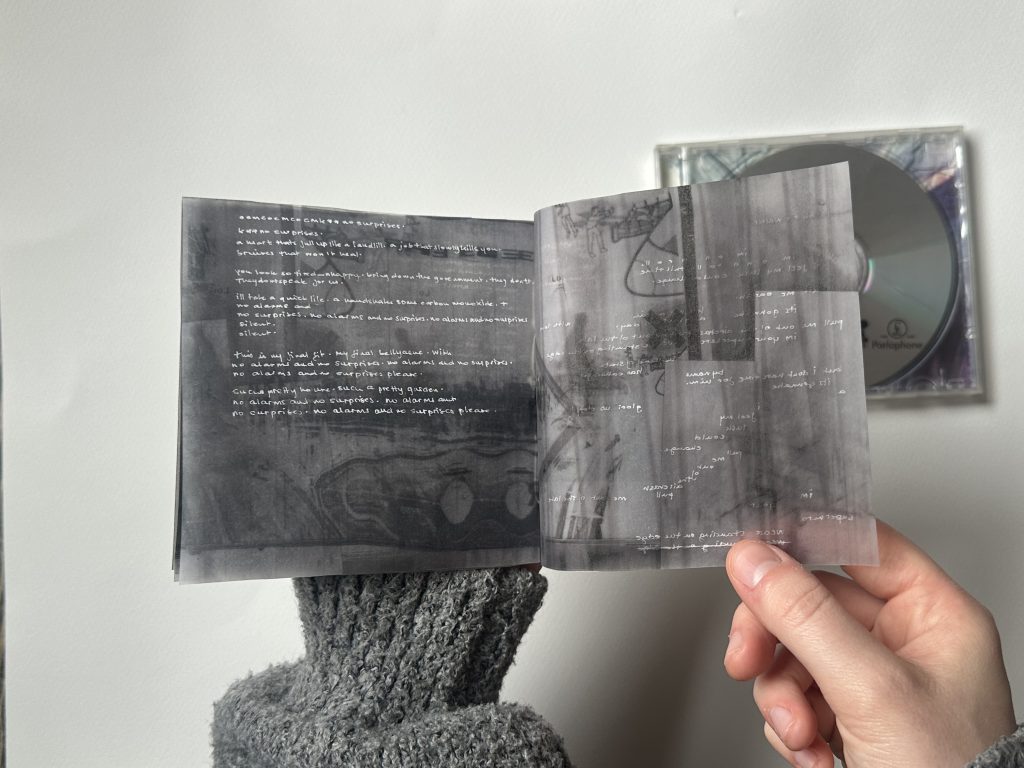
I therefore began experimenting with integrating fragments of the original lyrics alongside the layered imagery.
Similarly, during the final crit, my tutor suggested producing a process video to help viewers better understand the steps and iterations behind the final booklet. I decided to take on this feedback, staging the video using the existing prints and materials in order to demonstrate the process without generating unnecessary waste.
The video can we found here;
That’s all for week 3 😀
Leave a Reply